
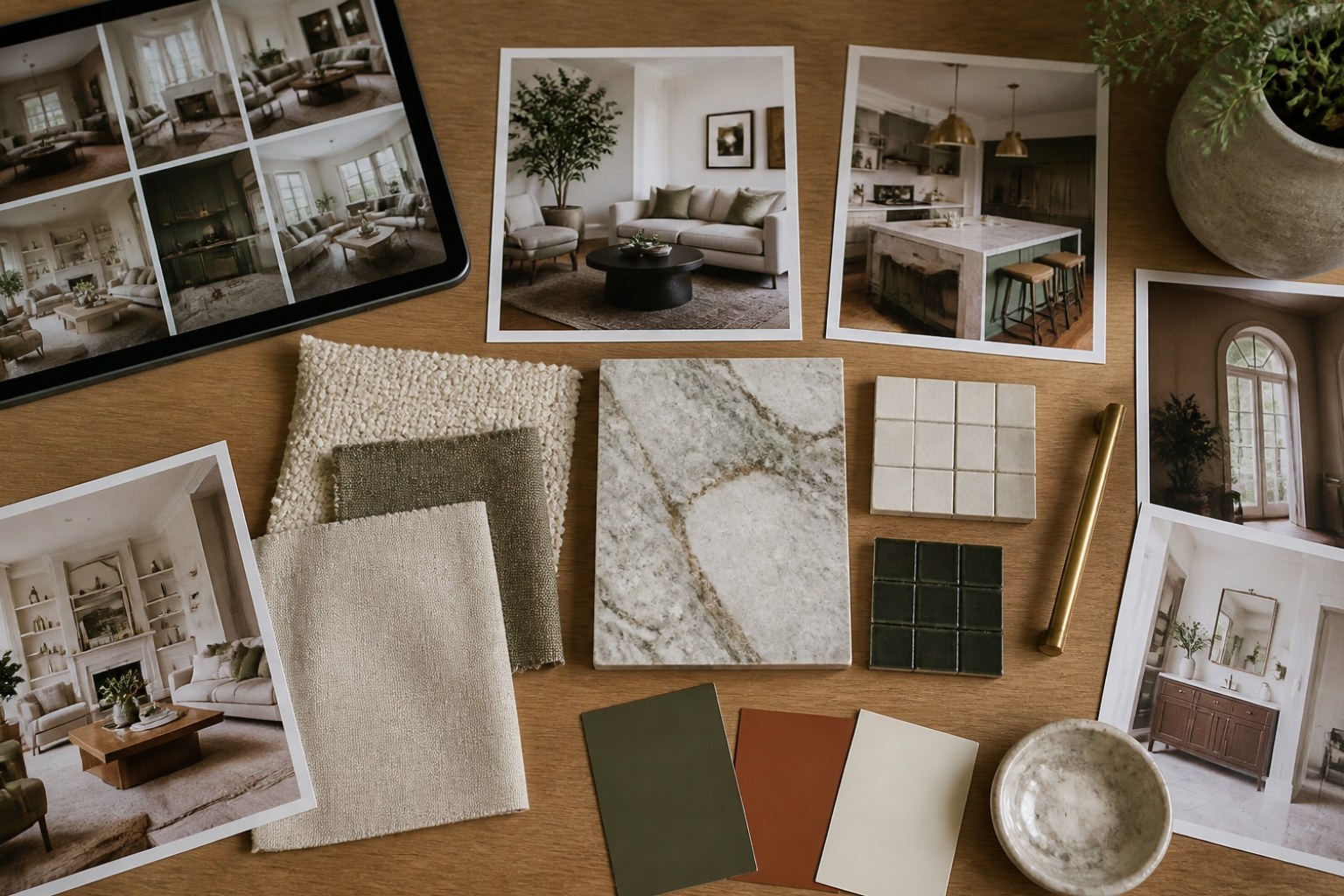
The short answer: A useful dream board is focused, organized, and explained. Keep one board per room, save broadly and then edit down to your favorites, add a note to each image saying exactly what you like, include a few images you dislike, and pair it with photos and measurements of your actual space. That turns a scroll of pretty pictures into a clear brief your designer can work from.
The images in this article are concept images created for illustration. They are not photos of MBlassingille Designs projects.
Why a Dream Board Helps
Most people find it easier to show their style than to describe it. A good dream board shortens the first conversations with your designer, reveals patterns you may not have noticed, and helps everyone agree on a direction before time and money go into drawings and selections. It is also a fun way to get clear on what you want before your first consultation.
Step 1: Pick One App and Make a Board for Each Room

Use whichever app you already open most: Pinterest, Instagram, or Houzz all work. Then create a separate board or saved collection for each space, such as “Kitchen,” “Primary Bath,” and “Living Room.” One giant board makes it hard to see what you want in any single room.
- Pinterest: Boards and board sections keep rooms organized, and you can keep a board secret until you are ready to share it with your designer.
- Instagram: Save posts into named collections. Designers, builders, and showrooms post real, finished projects, so it is a great place to find ideas for specific materials.
- Houzz: Ideabooks work the same way and include many photos of real local projects.
Step 2: Save Broadly, Then Edit
For the first couple of weeks, save anything that catches your eye without overthinking it. Then go back and edit each board down to roughly 10 to 20 images you truly love. If you find yourself saving the same kind of room again and again, that is a signal worth keeping.
Step 3: Say What You Love About Each Image
This is the step most people skip, and it is the most valuable. A photo of a kitchen might be saved for the cabinet color, the light fixture, or the way the island is used. Add a quick note or caption to each image:
- “Love the warm wood cabinets, not the countertop.”
- “This is the mood I want: calm, warm, not too busy.”
- “Want this shower size and the bench.”
- “Color of the walls, but softer.”
Short notes like these tell your designer exactly what to pull from each image.
Step 4: Add a Short “Not for Me” List
Save five or six images you dislike and note why: too cold, too busy, too formal, the wrong shade of green. Knowing what you do not want rules out whole directions and saves time in the concept stage.
Step 5: Include the Real Room
Inspiration shows where you want to go. Your designer also needs to know where you are starting. Add a folder or board section with:
- Photos of the space as it is today, taken from each corner
- Rough measurements, plus window and door locations
- Furniture, art, or rugs you plan to keep
- Anything that must stay, such as flooring, plumbing locations, or built-ins
- For a condo, any building or HOA rules you know about
Step 6: Note How You Live and What You Can Spend
Be honest about daily life. Do you have kids or pets? Do you cook every night or entertain on weekends? Do you need a home office? A budget range and ideal timing matter just as much, because they shape which ideas are realistic. If you are unsure what design help costs, see our guide to interior designer fees in Dallas.
Step 7: Look for the Patterns
Before your consultation, scroll through your edited boards and look for repeats. You may notice the same wood tone, a color family, rounded furniture, lots of natural light, or a particular kind of tile. Those patterns are the core of your style, even when individual images look different.
What Your Designer Does With It
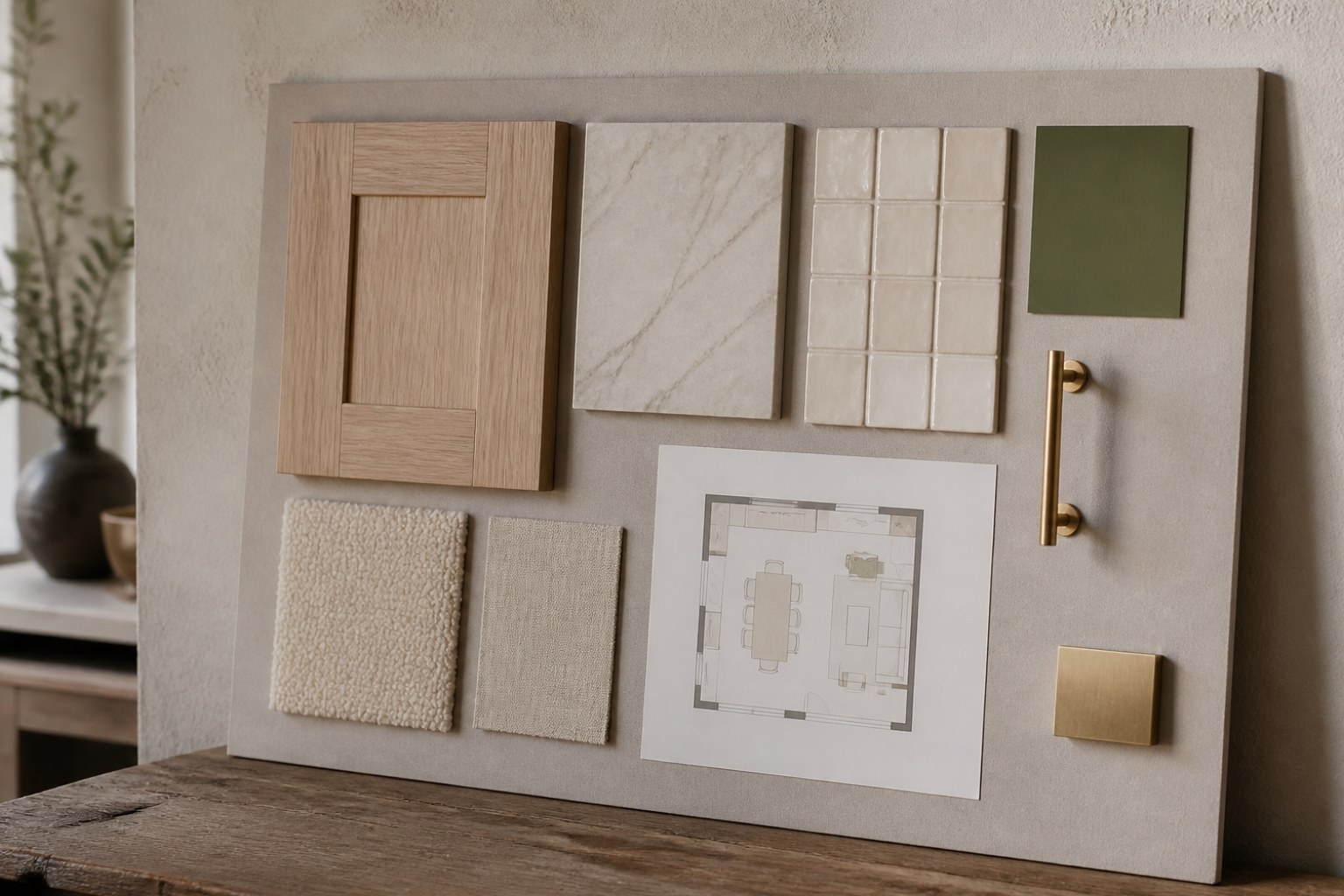
Your designer turns the dream board into a plan. That usually means a design concept and a material board with real samples (cabinet finishes, stone, tile, paint, hardware, and fabrics) chosen to work together in your home and within your budget. From there come floor plans, selections, and specifications for your builder or contractor. For a full picture of each step, see how to work with an interior designer in Dallas and what an interior designer actually does.
Common Dream Board Mistakes
- One board for the whole house. Separate rooms so each one is easy to read.
- Hundreds of images, no notes. Edit down and explain what you love.
- Only magazine-perfect rooms. Include a few realistic, lived-in spaces too.
- Ignoring the real space. Ceiling height, light, and layout change what will work.
- Waiting until the last minute. On a new build, selections deadlines arrive quickly, so start early.
Dream Board FAQs
How many photos should a dream board have?
Save as much as you like while you are collecting, then edit it down to roughly 10 to 20 favorites per room. A focused board makes your style easier to read than hundreds of loosely related images.
Should I use Pinterest, Instagram, or Houzz?
Use whichever app you already open most. What matters is keeping one board or collection per room and adding notes about what you like in each image. Pinterest boards are easy to share with a designer, and Instagram collections work well if that is where you find most of your ideas.
What should I do if my dream board has several different styles?
That is normal. Mixed boards often reveal one or two common threads, such as a color family, a warm wood tone, or a love of curves. A designer can spot those patterns and blend them into one cohesive plan.
Should I include rooms I don’t like?
Yes. A short list of images you dislike, with a note on why, is one of the most useful things you can give a designer. It rules out whole directions quickly.
What else should I share besides inspiration photos?
Include photos and rough measurements of your current space, pieces you plan to keep, your budget range and timing, and how you use the room day to day. For a condo, include any building or HOA rules you know about.
Bring Your Board to a Consultation
MBlassingille Designs helps Dallas homeowners turn inspiration into a plan through full-service design, selections, and consulting. Contact us and bring your dream board to your first conversation.
Leave a Reply