
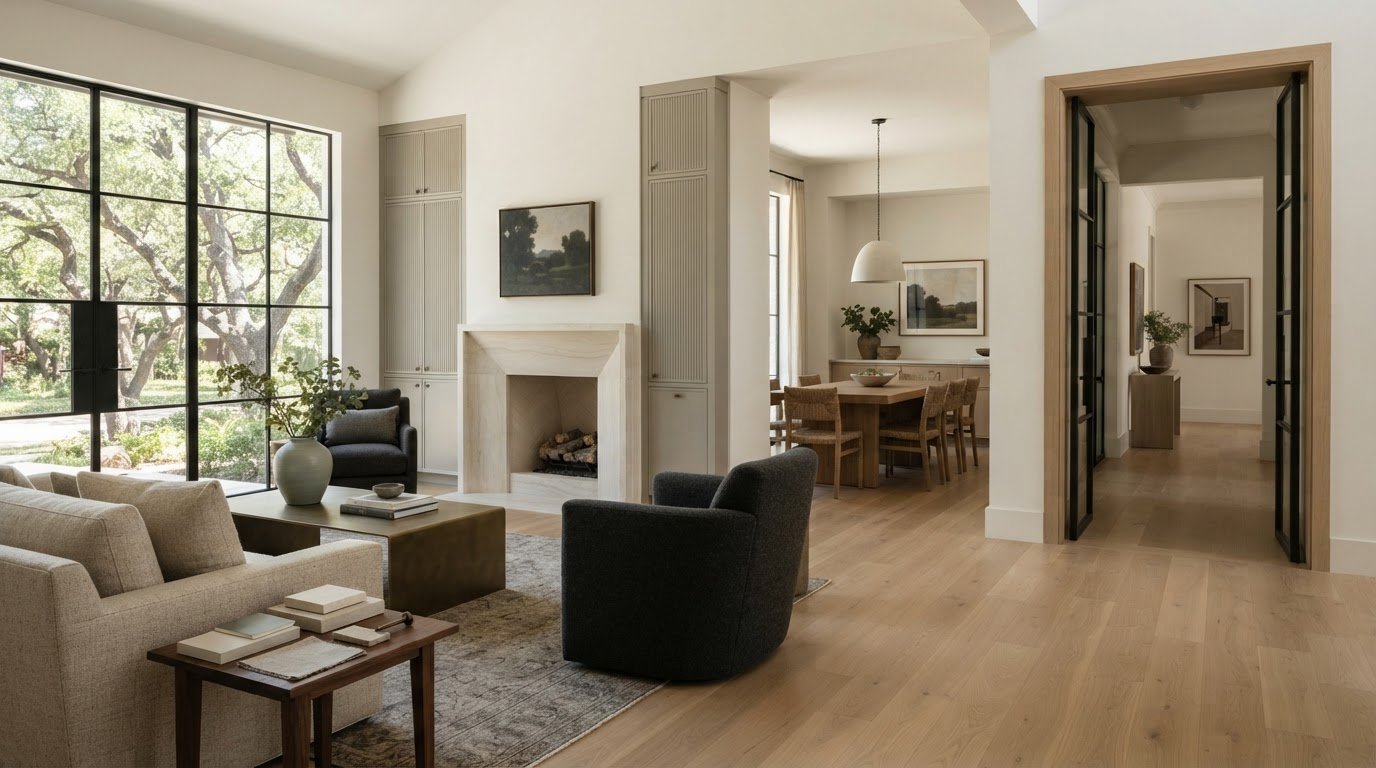
No, every room doesn’t have to match. In connected public rooms, continuous flooring can maintain visual flow, while a finish change at a doorway is more likely to feel intentional than one in the middle of an open sightline. How to choose home finishes comes down to balancing whole-home cohesion with each room’s use and the practicalities of a remodel.
It’s easy to focus on the finish in front of you and make choices one room at a time. The challenge is ensuring those choices work together, stand up to daily use, and make sense if the project happens in phases. This guide explains how to build a cohesive palette, weigh style against durability, and prioritize decisions that are difficult to revisit later. You’ll also learn where finishes can vary between rooms, how to plan around existing features, and which selections deserve attention early. A clear sequence makes the process more manageable, from initial material choices to the details that carry through the home.
Key Takeaways
- Build continuity with a few finishes that carry between connected rooms, and use natural transitions where materials change.
- Test paint colors in different parts of the home and at different times of day before settling on a whole-house choice.
- Match material choices to each space’s use and maintenance needs, then direct more of the budget toward finishes that matter most in daily life.
- For a phased remodel, document recurring selections early and prioritize components that would be disruptive to replace later.
Do all the rooms really have to match?
No. A home can feel cohesive without repeating every finish in every room. In Dallas, begin with the home’s architecture and existing features, then choose a few visual connections.
Create Continuity Without Matching Every Finish
Choose a recurring element, such as trim color, flooring, or hardware, to link nearby rooms. In connected public spaces, continuous flooring can maintain visual flow; place a material change at a doorway rather than in the middle of an open sightline. A home with separate dining and living rooms can use distinct wall colors while keeping trim consistent. Avoid repeating every surface just to create unity.
Match Materials to Style and Lifestyle
Let the home’s architectural character guide material choices, then consider how each room is used. A Craftsman-style home can pair shingles with brick or stone accents, while a Tuscan-style home may combine stucco and stone. Indoors, choose practical finishes for busy areas and more delicate textures for rooms with lighter use. Avoid choices that suit a style reference but conflict with your household’s routines.
- Coordinate color, texture, and scale through a shared palette. Repeat finishes selectively, then vary nearby surfaces to give each room its own definition.
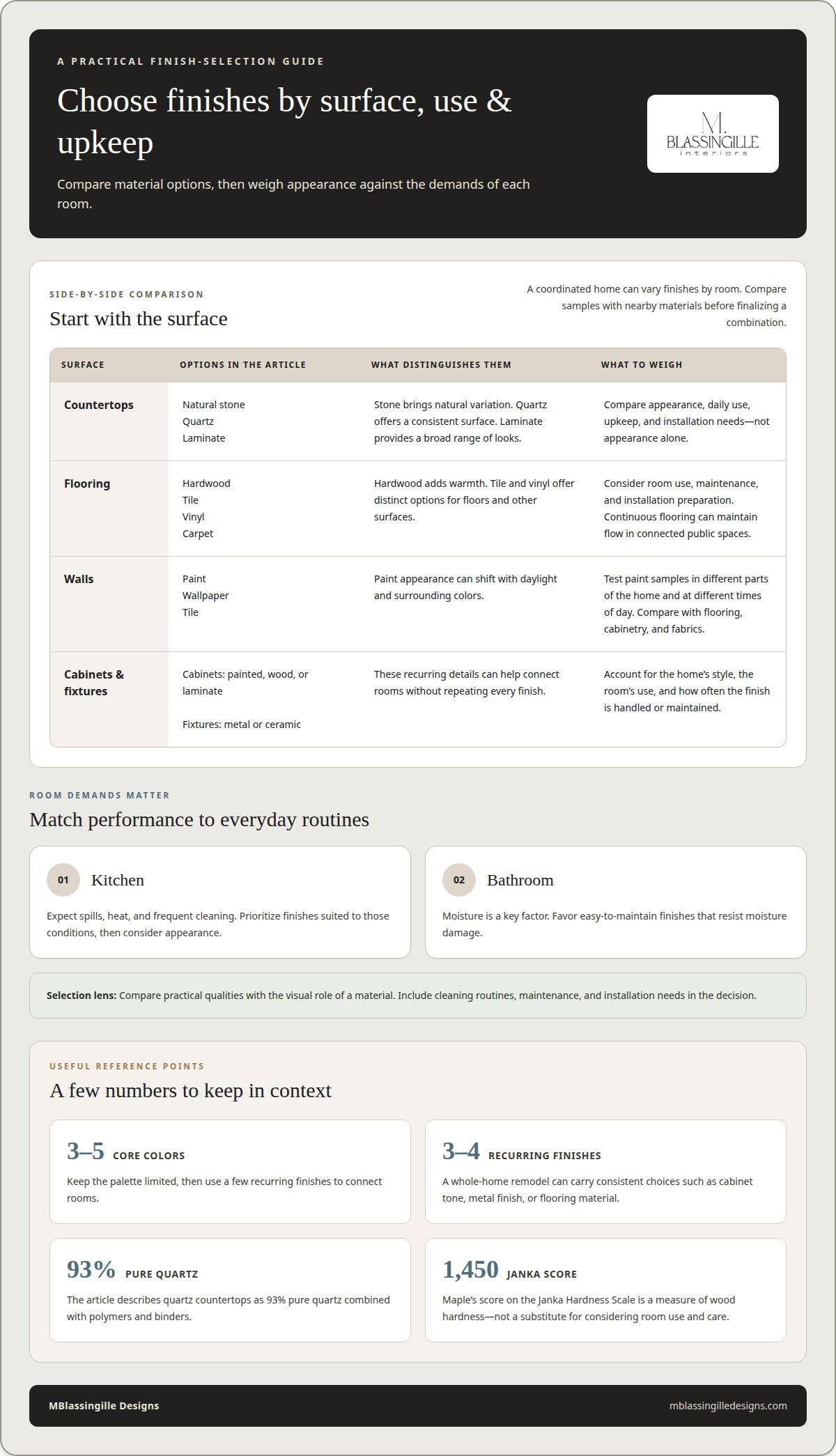
- Compare finish types by surface: floors include hardwood, tile, vinyl, and carpet; walls include paint, wallpaper, and tile; countertops include quartz, granite, laminate, and stainless steel. Cabinets may have painted, wood, or laminate finishes, while fixtures often feature metal or ceramic.
- Follow the building and safety requirements adopted for your location and project. Requirements depend on jurisdiction and application, so account for them when finishes are selected and specified.
- Favor low-VOC, water-based adhesives and coatings, along with finishes that are easy to maintain and resist moisture damage. The U.S. Environmental Protection Agency notes that solvent-free powder and radiation-cured coatings can still emit VOCs during curing.
- Avoid relying on a small sample or overlooking transitions, room use, and installation preparation. Compare samples with surrounding finishes before finalizing a combination.
Which finishes are worth spending on?
Prioritize finishes by how often you use them, how they perform, and how well they support the overall palette. Test colors and compare materials before finalizing a coordinated plan for the whole home.
-
Compare Finish Materials
Compare natural stone, quartz, laminate, hardwood, tile, and vinyl by appearance, daily use, upkeep, and installation needs. Stone brings natural variation; quartz offers a consistent surface; laminate provides a broad range of looks. Hardwood adds warmth, while tile and vinyl offer distinct options for floors and other surfaces. Match each material to the room, rather than choosing on appearance alone.
-
Test Colors and Build a Palette
Test paint samples at different ends of the home and at different times of day. Compare each with nearby flooring, cabinetry, and fabrics, since daylight and surrounding colors affect how paint looks. Gather the strongest options on a mood board, using swatches and material samples to assess color, texture, and scale together. Avoid approving a whole-home color based on one wall or one lighting condition.
- Limit the palette to 3-5 core colors, then select a few recurring finishes to connect rooms. For a whole-home remodel, carry three or four consistent finish choices through the house, such as a cabinet tone, metal finish, or flooring material. A simple palette gives varied rooms a shared visual structure without making every surface identical.
- Prioritize finishes by use and maintenance, then compare the full installed cost. Cost per square foot depends on the material, area, preparation, and installation complexity; the price is provided after a quote request. A countertop, for example, should be assessed for both its appearance and how well it suits the room’s daily demands, not just its sample.
Balancing style, durability, and budget
Set priorities by room use, maintenance needs, and the finishes you interact with every day. In kitchens and bathrooms, favor surfaces that are easy to maintain and resist moisture damage.
- Rank each room by exposure and routine. Kitchens face spills, heat, and frequent cleaning; bathrooms experience moisture. Choose finishes suited to those conditions, then consider appearance. The U.S. Environmental Protection Agency recommends easy-to-maintain materials that resist moisture damage for healthier finish choices.
- Compare a material’s practical qualities with its visual role. Maple scores 1,450 on the Janka Hardness Scale, a measure of wood hardness. Quartz countertops are made from 93% pure quartz combined with polymers and binders. These details help frame a comparison, but the room’s use and the surface’s care requirements should guide the final choice.
- Protect the budget by separating essential performance from optional upgrades. Prioritize frequently used surfaces, such as counters and flooring, then simplify lower-impact details if needed. Door hardware is handled several times a day, so its quality becomes apparent through regular use. Keep the home’s architectural style in view as you decide where material character matters most.
- Choose coatings and adhesives with indoor use in mind. The U.S. Environmental Protection Agency advises favoring low-VOC, water-based adhesives and coatings. Pair them with finishes that are straightforward to maintain, and consider how cleaning routines affect materials over time. Avoid choosing a finish based only on its initial appearance when upkeep and moisture exposure also affect performance.
- Review all selections together before finalizing them. Check that finishes align in color and texture, suit each room’s demands, and support a manageable care routine. A surface that performs well in one setting may not fit another, so assess kitchens and bathrooms separately rather than applying one material choice everywhere.
Planning finishes for phased remodels
Plan the overall finish direction before beginning a phased remodel, even if construction will happen room by room. A written selection record helps each stage connect to the next and makes it easier to choose home finishes that remain consistent over time.
Plan the Phases and Sample Finishes
Map the rooms and work stages, then document finishes that may affect more than one area. Record paint colors, flooring transitions, hardware, and materials alongside the rooms where they belong. Compare samples with existing surfaces and fixed features, not only with one another. This helps later work relate to completed rooms and reduces the risk of a new selection clashing with something that will stay.
Budget and Purchase Finishes
Decide early on components that may be difficult to replace after the home is closed up. Cabinet boxes, hinges, flooring, and plumbing valves inside walls can require opening up the home if replaced later. Keep a written record of selections and their intended locations, then use it to guide each purchase. For phased work, choosing home finishes means considering both the current room and future stages.
- Set the sequence by room and project stage. Note which finishes will remain, which will change, and where new work meets completed areas. Use those transitions to coordinate materials and colors.
- Sample materials before purchasing. Compare each one with adjacent finishes under the room’s lighting, then record its color, texture, and intended location. Keep samples or clear photographs with your selection record.
- Prepare a purchasing plan for each phase. Record every finish, its room, and related selections, then review the notes before making later purchases. This keeps new additions connected to earlier decisions without requiring every room to be completed at once.
For guidance coordinating selections across project phases, plan your finish selections with a design professional. For a new build, see how new build design selections are typically handled at each stage.
MBlassingille Designs: Design
MBlassingille Designs brings design, selections, and consulting together to help align finish decisions across rooms, project phases, and the overall design direction. Design and selections shape material choices into a coordinated plan, while consulting helps clarify priorities before decisions move forward. For new construction, planning can begin alongside the broader design process; for a home remodeling and interior design project, it can connect new finishes with existing features. This support is especially useful when balancing personal style, daily use, and choices that affect later phases. The result is a considered set of selections that feels intentional from room to room and practical for the way you live. Contact MBlassingille Designs to discuss your home’s finish selections.
Move Forward With a Clear Finish Direction
Your finish plan should do more than settle today’s choices. It should provide a clear direction as rooms evolve, furnishings arrive, and future project decisions take shape. Knowing how to choose home finishes means considering how each selection contributes to the home as a whole while still allowing individual rooms to feel personal. That perspective helps keep each new decision connected to the last.
If you’re ready to turn ideas into a coordinated plan, MBlassingille Designs offers Design, Selections, and Consulting to shape a material direction around your home and project priorities. Bringing this support in before key choices are fixed can clarify how finishes relate across rooms or remodel phases. You remain central to the decisions, with a considered framework to guide them.
Contact MBlassingille Designs to discuss a thoughtful next step for your home. A clear direction makes it easier to create spaces that feel cohesive, practical, and distinctly yours.
Frequently Asked Questions
Which home finishes are most durable and easiest to maintain for each room?
Choose finishes according to each room’s traffic, spills, and cleaning routine. In an entry, prioritize flooring that can handle tracked-in dirt and frequent cleaning; in a bedroom, comfort underfoot may matter more. For kitchens and bathrooms, consider how easily surfaces can be wiped down after everyday use. A finish is easier to maintain when its care requirements suit your household’s habits.
How do lighting and natural daylight affect home finish colors and appearance?
Lighting changes how colors and textures look, so a finish can appear different in different parts of the same room. Direct daylight may make paint look brighter, while shaded corners can make it feel deeper. Artificial lighting also shifts the appearance of paint, stone, and wood after sunset. Consider the room’s windows, shadowed areas, and evening lighting when choosing colors.
What finish choices increase home resale value and appeal to buyers?
Well-maintained finishes that suit the home’s style can support buyer appeal, especially when rooms feel considered rather than overly personalized. Hardwood flooring can increase a home’s value by 3-5%. Beyond flooring, focus on a coherent overall impression: finishes that work together, look cared for, and let buyers imagine their own furnishings in the space. Avoid selecting finishes based on resale alone; daily comfort matters too.
How much do common home finishes cost per square foot, including installation?
Installed costs vary with area, preparation, and installation complexity.
What low-VOC and environmentally friendly home finish options are available?
Favor low-VOC, water-based adhesives and coatings, along with finishes that are easy to maintain and resist moisture damage. Solvent-free powder and radiation-cured coatings can still emit VOCs during curing.
Leave a Reply