
Tag: durable materials

  • How to Choose Home Finishes for Style and Durability

    How to Choose Home Finishes for Style and Durability

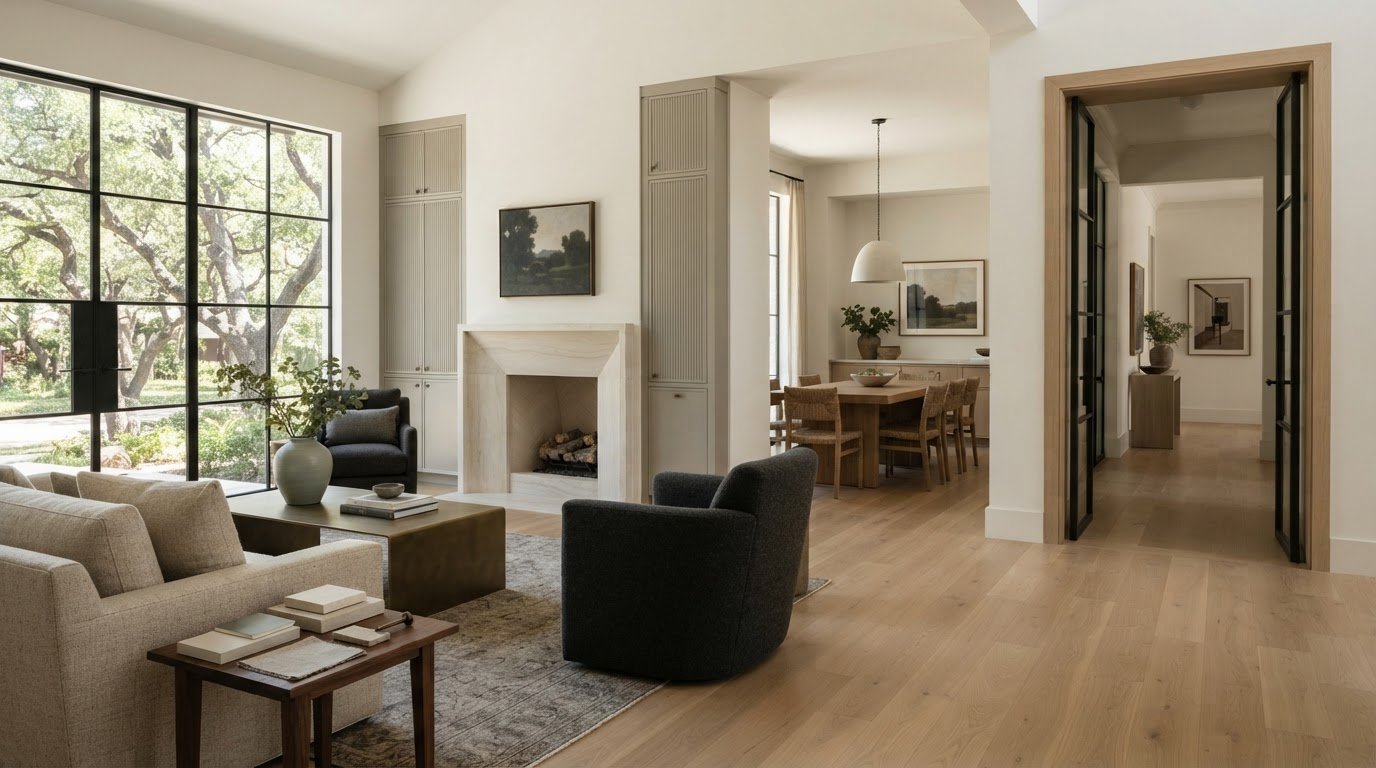
    No, every room doesn’t have to match. In connected public rooms, continuous flooring can maintain visual flow, while a finish change at a doorway is more likely to feel intentional than one in the middle of an open sightline. How to choose home finishes comes down to balancing whole-home cohesion with each room’s use and the practicalities of a remodel.

    It’s easy to focus on the finish in front of you and make choices one room at a time. The challenge is ensuring those choices work together, stand up to daily use, and make sense if the project happens in phases. This guide explains how to build a cohesive palette, weigh style against durability, and prioritize decisions that are difficult to revisit later. You’ll also learn where finishes can vary between rooms, how to plan around existing features, and which selections deserve attention early. A clear sequence makes the process more manageable, from initial material choices to the details that carry through the home.

    Key Takeaways

    • Build continuity with a few finishes that carry between connected rooms, and use natural transitions where materials change.
    • Test paint colors in different parts of the home and at different times of day before settling on a whole-house choice.
    • Match material choices to each space’s use and maintenance needs, then direct more of the budget toward finishes that matter most in daily life.
    • For a phased remodel, document recurring selections early and prioritize components that would be disruptive to replace later.

    Do all the rooms really have to match?

    No. A home can feel cohesive without repeating every finish in every room. In Dallas, begin with the home’s architecture and existing features, then choose a few visual connections.

    Create Continuity Without Matching Every Finish

    Choose a recurring element, such as trim color, flooring, or hardware, to link nearby rooms. In connected public spaces, continuous flooring can maintain visual flow; place a material change at a doorway rather than in the middle of an open sightline. A home with separate dining and living rooms can use distinct wall colors while keeping trim consistent. Avoid repeating every surface just to create unity.

    Match Materials to Style and Lifestyle

    Let the home’s architectural character guide material choices, then consider how each room is used. A Craftsman-style home can pair shingles with brick or stone accents, while a Tuscan-style home may combine stucco and stone. Indoors, choose practical finishes for busy areas and more delicate textures for rooms with lighter use. Avoid choices that suit a style reference but conflict with your household’s routines.

    1. Coordinate color, texture, and scale through a shared palette. Repeat finishes selectively, then vary nearby surfaces to give each room its own definition.
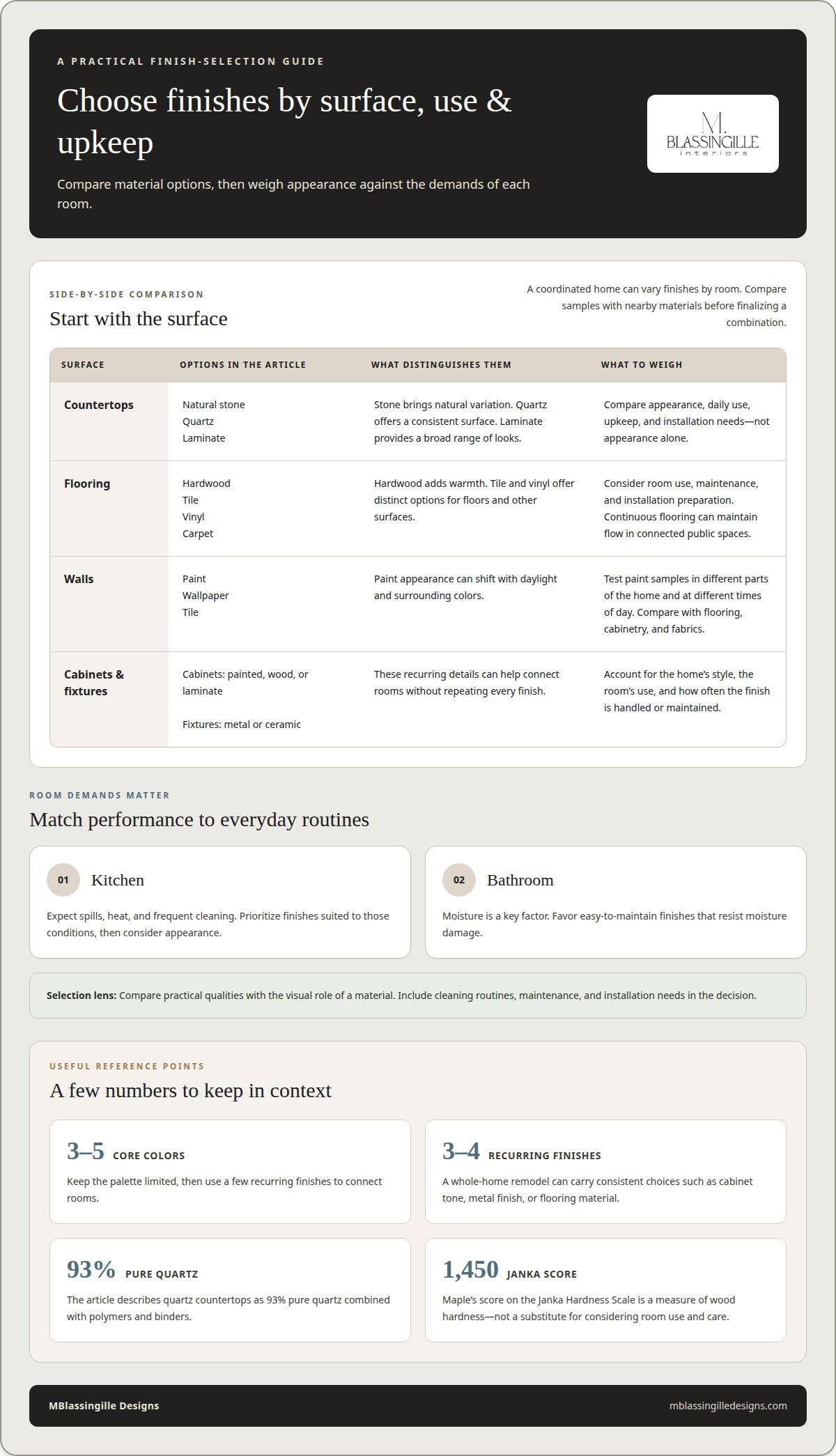
    2. Compare finish types by surface: floors include hardwood, tile, vinyl, and carpet; walls include paint, wallpaper, and tile; countertops include quartz, granite, laminate, and stainless steel. Cabinets may have painted, wood, or laminate finishes, while fixtures often feature metal or ceramic.
    3. Follow the building and safety requirements adopted for your location and project. Requirements depend on jurisdiction and application, so account for them when finishes are selected and specified.
    4. Favor low-VOC, water-based adhesives and coatings, along with finishes that are easy to maintain and resist moisture damage. The U.S. Environmental Protection Agency notes that solvent-free powder and radiation-cured coatings can still emit VOCs during curing.
    5. Avoid relying on a small sample or overlooking transitions, room use, and installation preparation. Compare samples with surrounding finishes before finalizing a combination.

    Which finishes are worth spending on?

    Prioritize finishes by how often you use them, how they perform, and how well they support the overall palette. Test colors and compare materials before finalizing a coordinated plan for the whole home.

    1. Compare Finish Materials

      Compare natural stone, quartz, laminate, hardwood, tile, and vinyl by appearance, daily use, upkeep, and installation needs. Stone brings natural variation; quartz offers a consistent surface; laminate provides a broad range of looks. Hardwood adds warmth, while tile and vinyl offer distinct options for floors and other surfaces. Match each material to the room, rather than choosing on appearance alone.

    2. Test Colors and Build a Palette

      Test paint samples at different ends of the home and at different times of day. Compare each with nearby flooring, cabinetry, and fabrics, since daylight and surrounding colors affect how paint looks. Gather the strongest options on a mood board, using swatches and material samples to assess color, texture, and scale together. Avoid approving a whole-home color based on one wall or one lighting condition.

    3. Limit the palette to 3-5 core colors, then select a few recurring finishes to connect rooms. For a whole-home remodel, carry three or four consistent finish choices through the house, such as a cabinet tone, metal finish, or flooring material. A simple palette gives varied rooms a shared visual structure without making every surface identical.
    4. Prioritize finishes by use and maintenance, then compare the full installed cost. Cost per square foot depends on the material, area, preparation, and installation complexity; the price is provided after a quote request. A countertop, for example, should be assessed for both its appearance and how well it suits the room’s daily demands, not just its sample.
    How to Choose Home Finishes for Style and Durability

    Balancing style, durability, and budget

    Set priorities by room use, maintenance needs, and the finishes you interact with every day. In kitchens and bathrooms, favor surfaces that are easy to maintain and resist moisture damage.

    1. Rank each room by exposure and routine. Kitchens face spills, heat, and frequent cleaning; bathrooms experience moisture. Choose finishes suited to those conditions, then consider appearance. The U.S. Environmental Protection Agency recommends easy-to-maintain materials that resist moisture damage for healthier finish choices.
    2. Compare a material’s practical qualities with its visual role. Maple scores 1,450 on the Janka Hardness Scale, a measure of wood hardness. Quartz countertops are made from 93% pure quartz combined with polymers and binders. These details help frame a comparison, but the room’s use and the surface’s care requirements should guide the final choice.
    3. Protect the budget by separating essential performance from optional upgrades. Prioritize frequently used surfaces, such as counters and flooring, then simplify lower-impact details if needed. Door hardware is handled several times a day, so its quality becomes apparent through regular use. Keep the home’s architectural style in view as you decide where material character matters most.
    4. Choose coatings and adhesives with indoor use in mind. The U.S. Environmental Protection Agency advises favoring low-VOC, water-based adhesives and coatings. Pair them with finishes that are straightforward to maintain, and consider how cleaning routines affect materials over time. Avoid choosing a finish based only on its initial appearance when upkeep and moisture exposure also affect performance.
    5. Review all selections together before finalizing them. Check that finishes align in color and texture, suit each room’s demands, and support a manageable care routine. A surface that performs well in one setting may not fit another, so assess kitchens and bathrooms separately rather than applying one material choice everywhere.

    Planning finishes for phased remodels

    Plan the overall finish direction before beginning a phased remodel, even if construction will happen room by room. A written selection record helps each stage connect to the next and makes it easier to choose home finishes that remain consistent over time.

    Plan the Phases and Sample Finishes

    Map the rooms and work stages, then document finishes that may affect more than one area. Record paint colors, flooring transitions, hardware, and materials alongside the rooms where they belong. Compare samples with existing surfaces and fixed features, not only with one another. This helps later work relate to completed rooms and reduces the risk of a new selection clashing with something that will stay.

    Budget and Purchase Finishes

    Decide early on components that may be difficult to replace after the home is closed up. Cabinet boxes, hinges, flooring, and plumbing valves inside walls can require opening up the home if replaced later. Keep a written record of selections and their intended locations, then use it to guide each purchase. For phased work, choosing home finishes means considering both the current room and future stages.

    1. Set the sequence by room and project stage. Note which finishes will remain, which will change, and where new work meets completed areas. Use those transitions to coordinate materials and colors.
    2. Sample materials before purchasing. Compare each one with adjacent finishes under the room’s lighting, then record its color, texture, and intended location. Keep samples or clear photographs with your selection record.
    3. Prepare a purchasing plan for each phase. Record every finish, its room, and related selections, then review the notes before making later purchases. This keeps new additions connected to earlier decisions without requiring every room to be completed at once.

    For guidance coordinating selections across project phases, plan your finish selections with a design professional. For a new build, see how new build design selections are typically handled at each stage.

    MBlassingille Designs: Design

    MBlassingille Designs brings design, selections, and consulting together to help align finish decisions across rooms, project phases, and the overall design direction. Design and selections shape material choices into a coordinated plan, while consulting helps clarify priorities before decisions move forward. For new construction, planning can begin alongside the broader design process; for a home remodeling and interior design project, it can connect new finishes with existing features. This support is especially useful when balancing personal style, daily use, and choices that affect later phases. The result is a considered set of selections that feels intentional from room to room and practical for the way you live. Contact MBlassingille Designs to discuss your home’s finish selections.

    Move Forward With a Clear Finish Direction

    Your finish plan should do more than settle today’s choices. It should provide a clear direction as rooms evolve, furnishings arrive, and future project decisions take shape. Knowing how to choose home finishes means considering how each selection contributes to the home as a whole while still allowing individual rooms to feel personal. That perspective helps keep each new decision connected to the last.

    If you’re ready to turn ideas into a coordinated plan, MBlassingille Designs offers Design, Selections, and Consulting to shape a material direction around your home and project priorities. Bringing this support in before key choices are fixed can clarify how finishes relate across rooms or remodel phases. You remain central to the decisions, with a considered framework to guide them.

    Contact MBlassingille Designs to discuss a thoughtful next step for your home. A clear direction makes it easier to create spaces that feel cohesive, practical, and distinctly yours.

    Frequently Asked Questions

    Which home finishes are most durable and easiest to maintain for each room?

    Choose finishes according to each room’s traffic, spills, and cleaning routine. In an entry, prioritize flooring that can handle tracked-in dirt and frequent cleaning; in a bedroom, comfort underfoot may matter more. For kitchens and bathrooms, consider how easily surfaces can be wiped down after everyday use. A finish is easier to maintain when its care requirements suit your household’s habits.

    How do lighting and natural daylight affect home finish colors and appearance?

    Lighting changes how colors and textures look, so a finish can appear different in different parts of the same room. Direct daylight may make paint look brighter, while shaded corners can make it feel deeper. Artificial lighting also shifts the appearance of paint, stone, and wood after sunset. Consider the room’s windows, shadowed areas, and evening lighting when choosing colors.

    What finish choices increase home resale value and appeal to buyers?

    Well-maintained finishes that suit the home’s style can support buyer appeal, especially when rooms feel considered rather than overly personalized. Hardwood flooring can increase a home’s value by 3-5%. Beyond flooring, focus on a coherent overall impression: finishes that work together, look cared for, and let buyers imagine their own furnishings in the space. Avoid selecting finishes based on resale alone; daily comfort matters too.

    How much do common home finishes cost per square foot, including installation?

    Installed costs vary with area, preparation, and installation complexity.

    What low-VOC and environmentally friendly home finish options are available?

    Favor low-VOC, water-based adhesives and coatings, along with finishes that are easy to maintain and resist moisture damage. Solvent-free powder and radiation-cured coatings can still emit VOCs during curing.
  • How to Coordinate Home Finishes for Cohesion and Durability

    How to Coordinate Home Finishes for Cohesion and Durability

    No, every room doesn’t need to match. A cohesive home can repeat a core palette of 3–5 hues and select a few finishes that carry from one space to another. Learning how to coordinate home finishes means balancing those shared elements with room-specific choices, including lighting, plumbing, and cabinet hardware.

    It’s reasonable to want finishes to feel connected, especially when rooms flow into one another. Matching every metal, surface, and color can make a home feel overly uniform, while unrelated choices can interrupt the flow. Aim for clear visual relationships, not a copy-and-paste scheme.

    This guide explains how to build a finish palette, use transitions intentionally, and prioritize durable materials in high-traffic areas. It also shows how a dominant metal finish and a deliberate second finish can bring lighting, plumbing, and hardware into alignment without repeating the same choice in every room.

    Key Takeaways

    • Choose flooring by room function: consider tile for moisture-prone spaces and softer carpet where comfort matters.
    • Use transitions, repeated materials, and related artwork to connect rooms while allowing each space its own character.
    • Prioritize finishes that are easier to maintain in busy areas, and weigh the care needs of materials such as marble.
    • Plan lighting, plumbing, and cabinet hardware together so their finishes feel deliberate across the home.

    1. What should I consider when choosing finishes for a custom home?

    Finish costs vary with material, quantity, and installation complexity, so compare the full scope rather than a single sample price. Prioritize elements that are difficult to replace later, such as cabinet boxes, hinges, flooring, and plumbing valves inside walls. Paint, decorative lights, and cabinet knobs are easier to change in a later phase.

    Choose flooring based on each room’s conditions. Tile suits moisture-prone kitchens and bathrooms, while carpet can add comfort in bedrooms and living rooms. Luxury vinyl or laminate can offer a wood or stone look with added water resistance. In connected public rooms, continuous flooring can guide the eye; use a deliberate transition where the room’s function or existing architecture calls for a change.

    Select finishes in sequence: establish flooring and fixed cabinetry, coordinate countertops, then choose wall colors, trim, rugs, and art. This order lets broad surfaces set the palette before smaller accents enter. Repeat related tones or materials across rooms, using a core palette of 3–5 hues rather than matching every finish.

    To coordinate flooring, cabinets, countertops, and wall colors, compare actual samples side by side. For example, pair a warm wood floor with cabinet samples and countertop veining, then test wall paint alongside them. Repeating trim white across rooms supports continuity, while rugs and artwork can echo adjacent spaces without duplicating them.

    Common mistakes include selecting finishes in isolation, relying on near-match floor transitions, and judging paint from a single sample. Paint can look different in rooms with different exposures. Place samples at both ends of the home and compare them in morning and late-afternoon light. A green-undertone white, for example, may look crisp in a bright south-facing kitchen yet swampy in a north-facing bedroom. Use wallpaper or an accent wall for contrast, while repeating trim, tones, or artwork to connect adjacent rooms.

    Costs depend on the material, quantity, and installation complexity, so compare the full scope of each finish. Prioritize cabinet boxes and hinges, flooring, and plumbing valves inside walls because they are difficult to replace later.

    2. Mixing finishes while maintaining a cohesive design

    Build a cohesive palette from the undertones in fixed materials, then give each color a role: background, supporting shade, or accent. Warm oak, creamy paint, and muted green, for example, can relate without matching exactly. This creates a consistent thread while allowing room-specific variation.

    Contrast can come from texture as well as color. Pair a smooth stone counter with visibly grained wood cabinetry: the different surfaces add interest, while shared warm undertones keep them aligned. Repeat a material or color at a doorway, in a nearby rug, or through framed art. The repeated element acts as a visual bridge, not a reason to duplicate entire rooms.

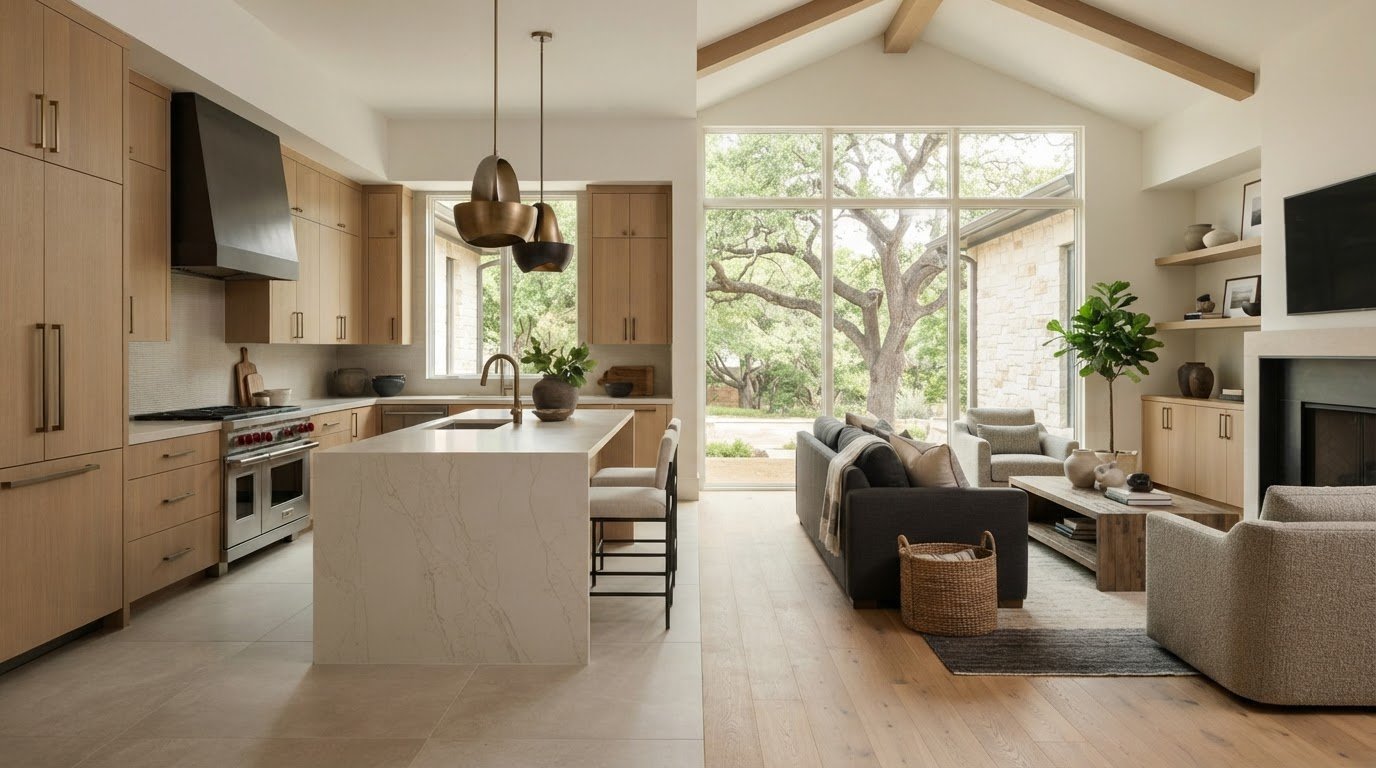
    In an open-plan kitchen and living room, use one floor and one white across the shared space. Distinguish functions through furniture, rugs, pendant placement, or cabinet color rather than abrupt surface changes. A rug can define the seating zone while the flooring continues beneath it.

    To combine design styles, choose an anchor before introducing contrasting pieces. Let traditional wood cabinetry establish the room’s character, for example, then add a simple modern light fixture. Relate the styles through a shared color, shape, or material, such as black accents repeated in a frame and chair legs. Keep the contrast focused; competing patterns and unrelated finishes can make the room feel unsettled.

    Before finalizing choices, arrange finish samples together and view them beside the room’s existing features. Compare how each surface relates to the floor, cabinetry, and wall color, rather than judging it alone. A considered residential design plan can map these relationships across connected rooms, helping each space retain its character while contributing to a coherent whole.

    How to Coordinate Home Finishes for Cohesion and Durability

    3. Choosing durable finishes for high-traffic areas

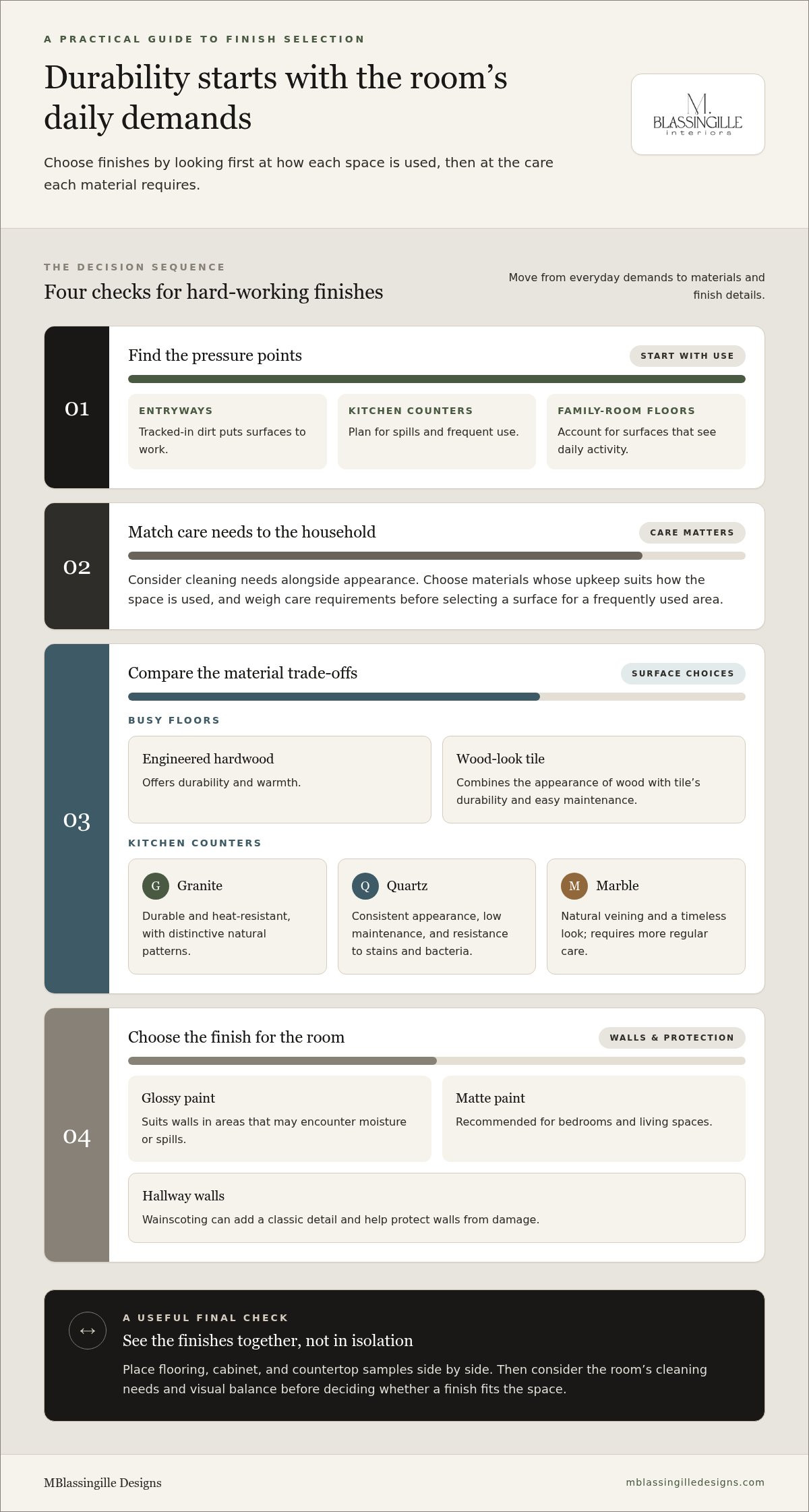
    Start by identifying where daily activity puts the most pressure on surfaces. Entryways collect tracked-in dirt, kitchen counters face spills, and family-room floors see frequent use. Consider cleaning needs alongside appearance, then choose materials whose care requirements suit how the household uses each space. Knowing how to coordinate home finishes means matching upkeep expectations to everyday routines.

    For busy floors, engineered hardwood offers durability and warmth. Wood-look tile provides the appearance of wood with tile’s durability and easy maintenance. In a kitchen, compare samples beside cabinetry and counters to see how the floor’s color and pattern relate to nearby surfaces. The right choice depends on the room’s use as well as the overall design.

    Countertops also call for different care considerations. Granite is durable and heat-resistant, with natural patterns that make each slab distinctive. Quartz offers a consistent appearance, low maintenance, and resistance to stains and bacteria. Marble has natural veining and a timeless look, but requires more regular care. Consider these differences before selecting a surface for a frequently used island.

    Glossy paint finishes suit walls in areas that may encounter moisture or spills, while matte finishes are recommended for bedrooms and living spaces. Wainscoting can add a classic detail and help protect hallway walls from damage. Choose a finish that suits the room’s use, then consider how its texture and color relate to surrounding materials.

    To decide how to coordinate home finishes while prioritizing durability, compare samples as a group. Place flooring, cabinet, and countertop samples together, then consider the room’s cleaning needs and visual balance. A finish that works in a rarely used guest room may not suit a busy kitchen. Choosing according to room use helps create a considered home that remains practical in daily life.

    4. Coordinating lighting, plumbing, and cabinet hardware

    Start with a dominant metal finish, then decide where a second finish can add contrast. Use one finish for kitchen plumbing fixtures and cabinet hardware, for example, then introduce another through the pendant lights. A deliberate relationship works better than selecting each item separately and hoping the metals look compatible once installed.

    In kitchens and bathrooms, coordinate finishes by giving plumbing fixtures a clear role in the palette. Repeat their finish in cabinet pulls or nearby lighting, then use a second metal selectively as an accent. The same approach works in both rooms, but each can have its own balance and focal point.

    Placement matters as much as the finish itself. A contrasting metal can feel intentional when it appears in more than one considered detail, such as a kitchen pendant and a nearby cabinet knob. Avoid scattering unrelated finishes across fixtures. Instead, group similar finishes by function or location so the eye can follow a consistent pattern.

    Compare lighting, plumbing, and hardware samples beside cabinetry and countertops before finalizing selections. A brushed-looking metal can read differently beside dark cabinets than beside pale stone, and a fixture’s shape affects its visual weight. Review the pieces together in the actual room, not just in a showroom display or isolated product image.

    Keep a finish schedule that records each chosen finish and its location. For instance, note the kitchen faucet, cabinet pulls, and pendant finish together, then document bathroom fixtures separately. This simple reference helps prevent substitutions from disrupting the plan during a remodel or new construction project. New build design selections are best documented in sequence so choices stay coordinated as construction progresses. Plan your finish selections with design support for a coordinated result.

    Paint, decorative light fixtures, and cabinet knobs are relatively easy to change, making them practical choices during an initial remodel phase.

    MBlassingille Designs: Design

    MBlassingille Designs brings finish decisions into one coordinated design plan. For new construction or a home update involving flooring, cabinetry, countertops, and fixtures, its design, selections, and consulting services connect individual choices to the broader vision.

    This support is useful when you have a clear direction but need help turning samples into a consistent palette, or when several rooms must feel related without repeating every finish. A considered selection process weighs appearance, room use, durability, and how materials relate across spaces. For new construction in Dallas, planning these choices together helps establish continuity before they become part of the finished home.

    Contact MBlassingille Designs to discuss design support for your home’s finish selections.

    Carry your finish plan into the next phase

    The next step is to turn design intent into a usable finish schedule. Record the selected materials, where they will go, and which decisions are settled or still flexible. This gives future choices a clear reference point and helps prevent a late adjustment from creating inconsistencies elsewhere.

    A thoughtful approach to how to coordinate home finishes also leaves room for personal expression. The goal isn’t to eliminate contrast, but to make each contrast deliberate within the home’s larger plan. As selections move toward installation, review the schedule against the spaces and update it when a considered change improves the overall composition.

    If you’d like guidance shaping that plan for your project, connect with MBlassingille Designs about finish advice. A clear starting point can make the decisions ahead feel more manageable, and help your home come together with intention.

    Frequently Asked Questions

    Does every room need to “match”?

    No. Rooms feel connected through repeated visual cues, not identical specifications. Consider the view from a hallway: a shared shape, color, or material can link the rooms in sight without making either feel copied. A study can have a deeper, quieter palette than a nearby living room while still relating through a repeated detail, such as a frame finish or fabric color.

    What should I consider when choosing finishes for a custom home?

    Consider room proportions, architectural details, daily routines, and the furnishings you plan to use. A large-format surface can read differently in a compact powder room than in a spacious kitchen, while a pronounced pattern may compete with detailed millwork. Bring finish samples together with furniture or fabric references, then assess whether their scale and character suit the rooms where they’ll appear.

    How do you mix wood tones and metal finishes without clashing?

    Compare undertones and visual weight rather than expecting every material to have the same color. A pale, fine-grained wood and a darker, strongly grained wood can work together when one remains the main surface and the other appears in a smaller piece. For metals, consider sheen and fixture scale alongside color. A large pendant has more visual presence than a small cabinet pull.

    How do you balance durability and maintenance when choosing finishes?

    Choose materials with care needs that suit how each room is used. In a frequently used entry, a surface that conceals everyday marks may be more practical than a delicate, highly polished finish. Consider the cleaning products and routine the material requires, along with how easily a damaged area can be repaired. A beautiful finish is easier to live with when its upkeep suits your household.