
Affordable updates don’t start with buying more; they start with choosing pieces that make a room feel considered. A professional approach to home furnishing and accessories can bring pillows, throws, lighting, rugs, and accents into a cohesive plan without major changes to the space.
It’s understandable to want a refreshed home while keeping selections and spending intentional. An interior designer can identify where a new rug or better lighting will have the greatest effect, then coordinate those choices with the furnishings and finishes already in place.
This article explains how professional curation can make affordable decor choices more purposeful, from balancing texture and color to selecting accessories that suit each room. It also covers what to consider when choosing a furnishing service, including project scope, how selections are coordinated, and whether the process aligns with your priorities.
Key Takeaways
- Coordinate pillows and throws by color, texture, and scale so smaller additions feel intentional within the room.
- A designer can narrow decor choices by aligning selections with your priorities, existing furnishings, and overall design direction.
- Lighting, rugs, and accessories can refresh a space without major changes when their placement and proportions support the room’s use.
- Room-by-room planning helps balance comfort, function, and visual cohesion; a furnishing service can coordinate those selections as part of a unified plan.
Pillows and throws
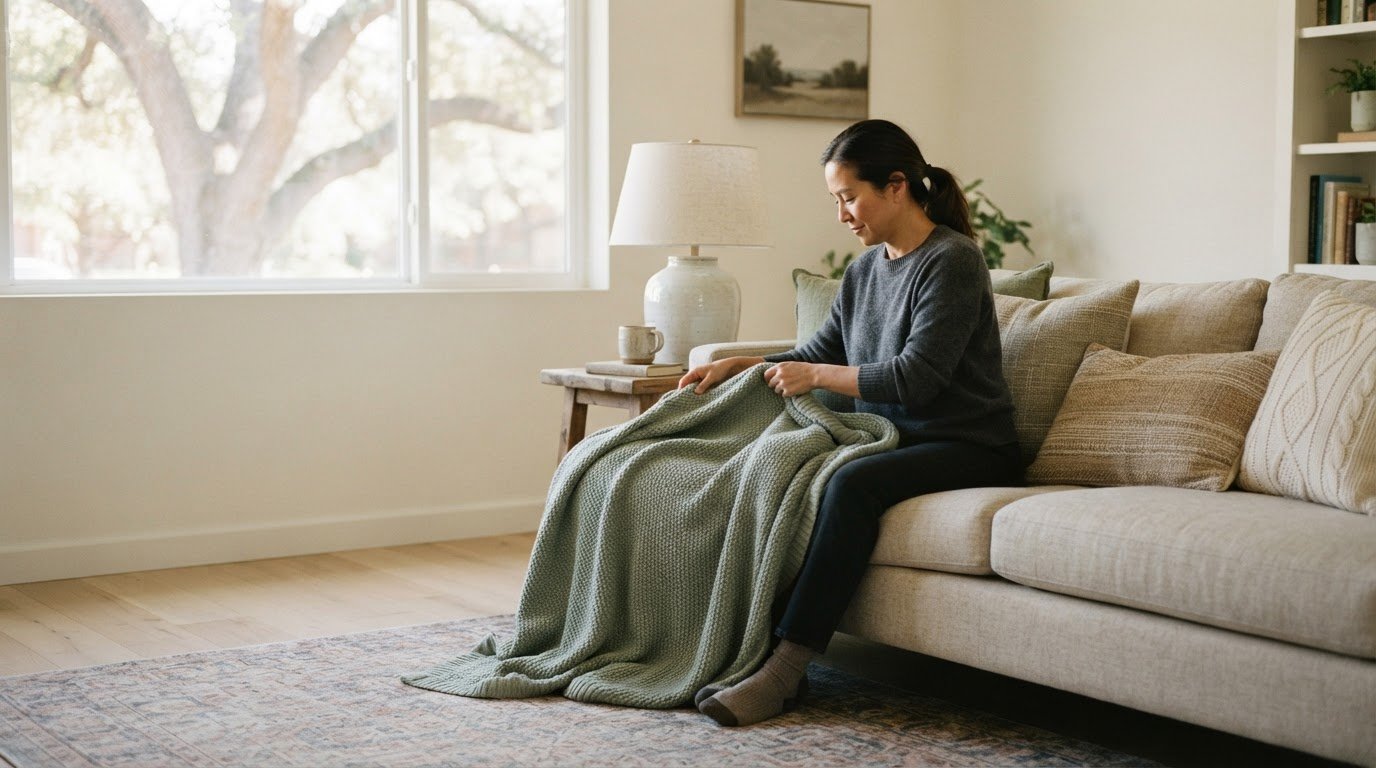
Pillows and throws can refresh a room without changing its main furnishings. Start with the sofa, bed, or chair that anchors the arrangement. An interior designer considers its color, shape, upholstery, and everyday use before recommending decorative layers. For example, a patterned pillow can pick up a secondary color in a rug or artwork. A throw can connect those colors through texture rather than adding another print.
Think in coordinated contrasts, not matching sets. A group of pillows can combine a solid, a subtle texture, and one measured pattern. On a neutral sofa, a muted green pillow and woven throw add definition without competing for attention. On a patterned chair, quieter pillows help keep the composition balanced. Scale matters too: pillows that are too small can disappear, while oversized ones may crowd the seat.
Choose materials to suit how the room is used. A family room may call for comfortable fabrics that stand up to frequent use, while a guest room can prioritize a carefully arranged finish. Designers also consider how a throw drapes across a chair or folds at the end of a bed. Thoughtful placement helps accessories look intentional, not temporary.
For furniture purchases in the United States, return, warranty, and delivery terms depend on the seller’s policies and purchase terms. Before ordering, review applicable deadlines, coverage, exclusions, and delivery scope, as details can differ by item and seller.
Room measurement and layout planning start with the room’s dimensions and fixed features. A designer records wall lengths, doorways, windows, and built-ins, then maps furniture footprints against circulation paths. For example, the plan can test whether a sofa, side table, and reading chair fit without blocking a doorway. This measured process connects accessory choices to the room’s actual layout.
These seasonal choices can complement the room’s established colors, textures, and furniture.
How can an interior designer help you source affordable home decor?
Online purchases can misrepresent scale, color, texture, or finish, and delivery terms vary. A designer can reduce these risks by reviewing dimensions, product details, and the room plan before finalizing selections.
Candleholders and Taper Holders
A considered candleholder can add structure without requiring a large decorative piece. Antique-brass taper holders, for example, bring a defined vertical line to a dining table or mantel. A designer weighs finish, silhouette, and scale against nearby objects. Pairing a slender holder with a low bowl creates contrast; matching every metallic accent can make the arrangement feel overly uniform.
Candles and Home Fragrances
Candles and home fragrances contribute to a room’s atmosphere, so placement should suit how people use the space. A candle on a living-room console can sit among books and a small tray, while a bedroom arrangement may call for fewer visual accents. A designer considers fragrance alongside the room’s materials, colors, and decorative objects to keep the selection aligned with the overall scheme.
Room-by-Room Furniture and Decor Choices
Each room calls for a different balance. In a living room, a designer coordinates candle accessories with seating, surfaces, and the focal point. In a dining area, holders should complement the table setting without overwhelming it. Baskets can add practical storage near an entry or reading chair while keeping the decor connected to the rest of the home.
For online selections, the designer compares listed dimensions and finish details with the intended location, then considers how each piece relates to nearby furnishings. This process helps identify mismatches before an order is placed. A coordinated decor selection can also account for candles, fragrance, and storage as parts of one room plan.
Lighting, rugs, and accessories
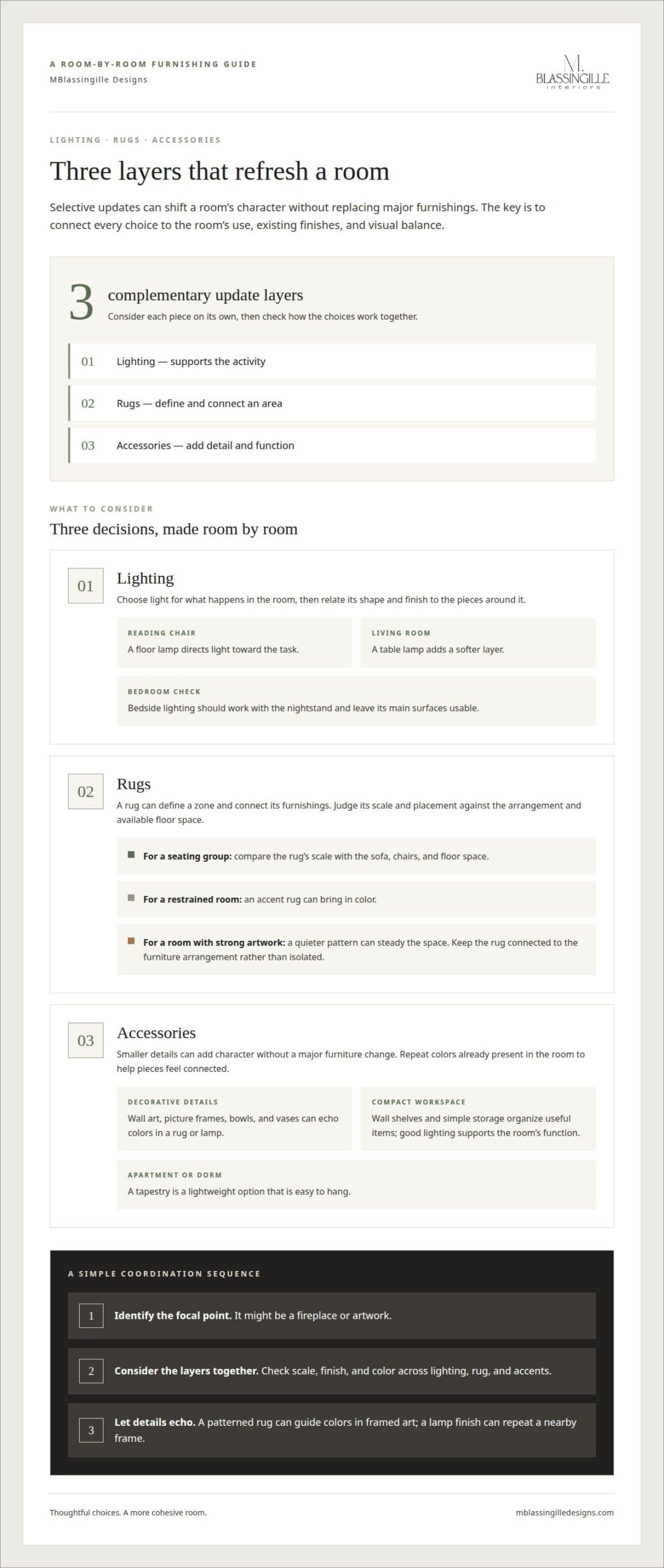
Lighting, rugs, and smaller accents can shift a room’s character without replacing major furnishings. A designer considers how each piece relates to the room’s use, existing finishes, and visual balance.
Lighting Choices
Choose lighting based on the activities each room supports. A floor lamp beside a reading chair directs light toward a task, while a table lamp can add a softer layer to a living room. In a bedroom, bedside lighting should work with the nightstand and leave its main surfaces usable. A designer also considers how lamp shapes and finishes relate to other pieces, so different styles feel coordinated rather than randomly assembled.
Rug Options
A rug defines an area and connects its furnishings. For a seating group, a designer considers the rug’s scale against the sofa, chairs, and available floor space. An accent rug can bring color to a restrained room, while a quieter pattern can steady a space with stronger artwork. Placement matters too: a rug should support the furniture arrangement instead of appearing isolated. Comparing these factors helps narrow the options before selecting.
Accessory Selection
Accessories give a room detail without requiring a large furniture change. Wall art, picture frames, decorative bowls, and vases can repeat colors already present in a rug or lamp. In a compact workspace, wall shelves and simple storage keep useful items organized, while good lighting supports the room’s function. A tapestry offers another option for apartments or dorms because it is lightweight and easy to hang.
To coordinate these pieces, a designer first identifies the room’s focal point, such as a fireplace or artwork. Then lighting, rug, and accent choices are considered together for scale, finish, and color. For example, a patterned rug can guide the colors in framed art, while a lamp’s finish can echo a nearby frame. This sequence keeps updates selective and cohesive.
How does an interior designer choose furniture and decor for each room?
A designer starts with how each room is used, then aligns furnishings with its layout and existing features. A living room for conversation needs a different arrangement from one centered on television viewing. Doorways, windows, storage, and furniture the household plans to keep also shape the design. This assessment helps prioritize useful pieces before adding decorative details.
In a living room, seating establishes the arrangement. A designer considers how chairs relate to the sofa, where people enter, and whether tables support daily routines. For example, a reading chair near a floor lamp creates a distinct area without separating it from the main seating group. A rug and artwork can then connect the zones through coordinated color and scale.
Bedrooms call for a quieter balance. Soft bedding, calming colors, and layered textures can create a restful feel, while bedside surfaces and lighting should suit nighttime routines. In a small home office, priorities shift to functional furniture, simple storage, and layered lighting. A designer may position shelves near the work surface, keeping frequently used items accessible without crowding the room.
Dining areas and entryways need their own practical logic. A dining table should leave room for chairs to move, while a console near the entrance can provide a landing place for everyday items. A designer relates finishes across adjoining rooms, perhaps repeating a wood tone or carrying an accent color from a rug into nearby artwork. This creates continuity without making every room identical.
Selections are refined against the agreed priorities, existing furnishings, and room plan. If a household wants to retain a sofa, the designer can coordinate surrounding pieces rather than replace it. For a considered room-by-room plan, start a design conversation.
MBlassingille Designs: Furnishing and Accessories
MBlassingille Designs brings room selections together through furnishing and accessories, design, and consulting. Turn to the studio when you want pillows, throws, lighting, rugs, and decorative pieces considered as part of a cohesive plan rather than chosen in isolation.
The process can begin with the rooms you want to update, the furnishings you plan to keep, and the priorities guiding your decisions. Selections can then be shaped around each room’s function, existing finishes, and overall direction. This approach is useful when you want a considered refresh that still supports day-to-day living.
For a more coordinated approach to your home, contact MBlassingille Designs to discuss your furnishing and accessories needs.
Shape Your Next Design Decision
An affordable refresh starts with a clear sense of what should change and what should remain. Before making selections, consider whether your priority is one room, a connected group of spaces, or a finishing layer across the home. Defining the scope gives the design process direction and helps keep each decision aligned with how you want to live.
For home furnishing and accessories, MBlassingille Designs offers design, selections, and consulting to give your space a considered direction. Start with a conversation about the rooms you want to address, the furnishings you plan to keep, and the changes that matter most to you.
Contact MBlassingille Designs to discuss your next design step. A thoughtful plan can make the path forward feel clear and manageable.
Frequently Asked Questions
Where do interior designers shop online?
Interior designers source furnishings through online retailers, makers’ websites, and trade-focused showrooms. The right channel depends on the item: a designer might compare upholstery options from a furniture brand, then seek a distinctive pendant from a specialist source. Before selecting, they assess dimensions, finish details, and how each piece fits the project’s direction, rather than relying on a product image alone.
What are the main types of home furnishings and accessories?
Home furnishings include functional pieces such as sofas, dining tables, beds, and storage furniture. Accessories add finishing details, including lamps, rugs, mirrors, artwork, pillows, throws, and decorative objects. This distinction can guide planning: a household furnishing an empty room may first need a bed and dresser, while an established room may benefit more from a mirror or carefully placed accent lighting.
How can an interior designer help you find affordable home furnishings and accessories in the United States?
An interior designer can focus selections on a room’s priorities, existing furnishings, and overall plan, helping avoid purchases that don’t fit or serve a clear purpose. In Dallas, Texas, MBlassingille Designs provides design, selections, consulting, and furnishing curation for residential spaces. For example, a homeowner updating a living room can discuss which existing pieces to keep and how new selections should work with them.
What are the risks of buying home furnishings online, and how can you avoid scams?
Online listings can misrepresent a piece’s scale, color, texture, or finish, and delivery terms vary. Compare dimensions and finish details with the room plan, and review the seller’s return, warranty, and delivery terms before ordering.
What are the latest home furnishing and interior design trends in the United States?
Popular decor choices include natural textures, soft colors, and layered materials. Coordinating lighting, rugs, and accents with existing furnishings can refresh a room without major changes.