
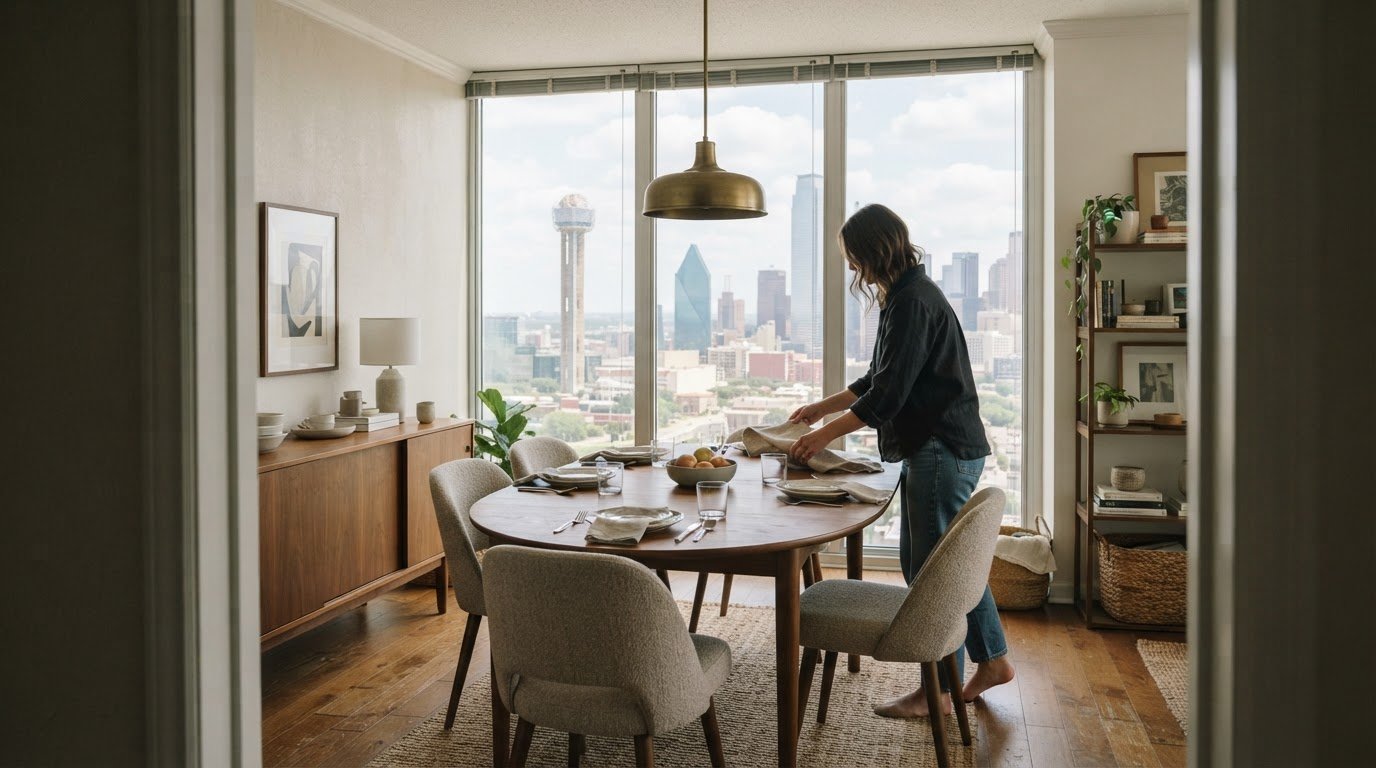
A lasting luxury room is built through restraint, not resistance to change. Timeless interior design for luxury homes pairs enduring forms and materials with the comfort and function of everyday life. Quiet luxury and minimalist design support this balance by prioritizing proportion, texture, and thoughtful choices over short-lived effects.
It makes sense to want a home that feels current without needing a complete redesign whenever tastes shift. A considered foundation keeps rooms cohesive while leaving space for personal details and trends that can change over time.
This article explains what gives luxury interiors lasting appeal, how to arrange furniture to support a room, and where trends can add character without defining the entire design. It also explores how quiet luxury and minimalism can create an atmosphere that feels composed, comfortable, and personal.
Key Takeaways
- Build lasting appeal around balanced proportions, practical function, and materials that work together rather than relying on a single statement feature.
- Furniture from different eras and cultures can feel cohesive when scale, shape, and material provide a clear connection.
- Use trend-led textiles, lighting, finishes, and accessories as adaptable layers that can refresh a room without replacing its foundation.
- Quiet luxury and minimalist design feel inviting when restraint is balanced with comfort, texture, and carefully selected details.
1. What Makes Interior Design Timeless?
Timeless interior design for luxury homes starts with a room that works before decorative details come into play. Furniture should support conversation, circulation, and daily routines, with proportions suited to the architecture. In a living room, a sofa and two chairs might face one another around a central table, leaving a clear route through the space. The arrangement feels intentional because every piece has a purpose, not because it follows a particular fashion.
Materials create harmony when their contrasts are controlled. Pair a linen sofa with a velvet chair, for example, and repeat a shared color in the cushions or rug. Wood, metal, glass, and stone add varied textures without fragmenting the palette. Classic forms steady the composition, while trends can appear in smaller, replaceable details. The goal isn’t to avoid change, but to keep central elements from feeling dated when preferences shift.
Natural materials give a home a grounded character. Solid wood paneling can bring warmth to a study or dining room, especially when its grain and finish complement the floor and nearby furnishings. Limestone, marble, and plaster offer distinct surface qualities, from subtle variation to more pronounced pattern. Earthy materials can connect an interior to its setting: local stone colors, wood tones, or landscape-inspired hues can inform the palette without turning the room into a literal theme.
Quality matters most in surfaces and furnishings that see regular use. A polished stone countertop, well-finished woodwork, and a durable leather chair contribute to both appearance and function. A coordinated design considers how finishes meet at thresholds, cabinetry, and furniture edges. That planning helps prevent individually attractive choices from competing once installed. A neutral foundation, layered materials, and functional furniture leave room for art and personal objects to evolve over time.
2. Q: Are there any furniture arrangements which don’t ever age?
No single furniture arrangement suits every home. A durable layout responds to the room’s proportions, circulation, and daily use instead of copying a fixed formula. In a living room, a sofa and chairs can frame conversation while keeping a clear path to the doorway. A coffee table should be within comfortable reach without obstructing movement around the seating.
Furniture from different cultures and eras can give a room depth when the pieces share a considered relationship. A Sonoran Desert home, for example, included vintage cognac leather Brazilian lounge chairs from the 1960s. Their character can sit comfortably beside contemporary lighting or restrained cabinetry when scale, color, and material are coordinated. The aim is a collected aesthetic, not a room where every piece appears to come from the same period.
Comfort and access matter as much as appearance. A timeless plan allows clear routes, supports changing routines, and keeps frequently used seating and surfaces within easy reach. As household needs change, the arrangement or furnishings can be adjusted without making the room feel less composed.
Sculptural furniture can create a focal point without relying on decoration alone. A sculptural chaise can define a reading area, while a bespoke console can organize an entry and give it a visual anchor. In a dining room, an heirloom-quality table can establish the room’s scale and remain useful as chairs, lighting, or accessories change.
Choose statement furniture for its form, comfort, and purpose, not simply its novelty. A substantial dining table may anchor a large space, while a distinctive chair can bring interest to a quieter corner. Leave surrounding pieces enough room for the statement piece to stand out. This balance keeps the arrangement refined and functional, even as individual furnishings are updated.
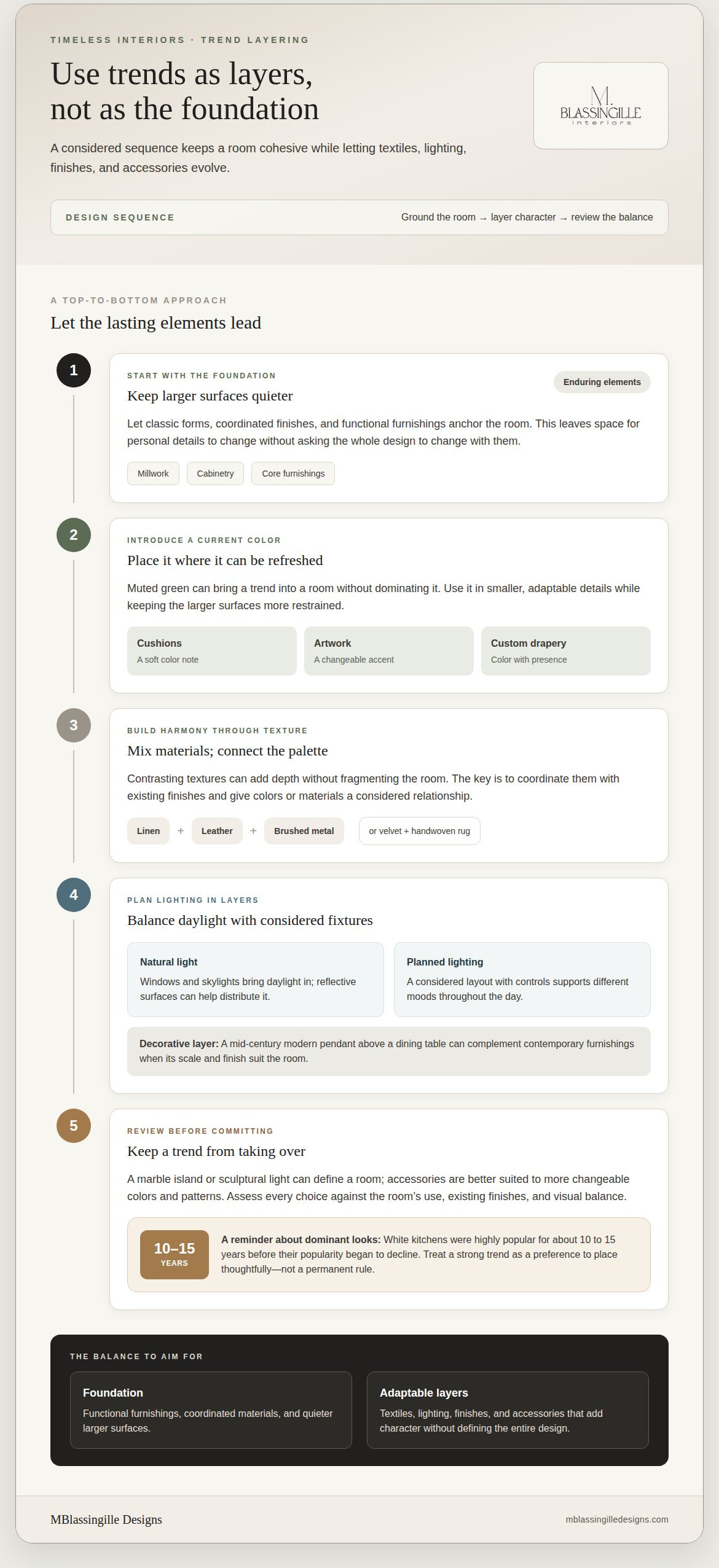
How a professional uses trends in textiles, lighting, finishes, and accessories
Trends work best as adaptable layers within a coordinated design. Muted green, for example, might appear in living room cushions, artwork, or custom drapery, while larger surfaces stay quieter. Linen, leather, and brushed metal add contrasting textures without requiring changes to millwork or cabinetry. This approach lets a room evolve while maintaining harmony among its materials and furnishings.
Some trend-led choices can date a room when they dominate every surface. White kitchens, for example, were highly popular for about 10 to 15 years before their popularity began to decline. Rather than treating a single look as a permanent rule, a designer considers how finishes work together and where a current preference belongs. A marble island or sculptural light can provide definition, while replaceable accessories carry more changeable colors and patterns.
Lighting calls for both architectural planning and decorative intent. Thoughtfully placed windows and skylights bring natural light into interior spaces, while reflective surfaces can help distribute it. A planned lighting layout with controls supports different moods throughout the day. Decorative fixtures add character: a mid-century modern pendant above a dining table can complement contemporary furnishings when its scale and finish suit the room.
Textiles and accessories offer a measured way to introduce bolder trends. Pair a velvet lounge chair with a handwoven rug, for instance, or use warm metals and curved furniture as focused accents. In a living room with abundant natural light, layered gray textiles can add depth without competing with the view. Assess each choice against the room’s use, existing finishes, and visual balance. The result feels current through considered details, not an accumulation of fashionable features.
4. Quiet luxury and minimalist design
Quiet luxury is not an empty room or a strict absence of detail. It uses minimalist principles to make each element purposeful, comfortable, and refined. In a beige living room, Belgian linen draperies and a tailored sofa can establish a calm foundation. Their natural texture softens the palette and accommodates the small imperfections of daily use.
Restraint brings architecture into focus. A window, ceiling line, or well-proportioned millwork can remain the focal point when surrounding elements are simple. Warm white, greige, taupe, and charcoal provide flexible foundation colors. They let materials and proportions carry visual interest instead of relying on bold decoration.
Minimalism still needs contrast. In an entry, white oak flooring, a painted wall, a mirror, and a buffet can create a clear composition. Leather-upholstered closet doors or a marble-and-metal console can add a refined detail without overwhelming the space. Giving each finish a defined role makes the overall balance feel considered rather than sparse.
The same approach works in busier rooms. A dining room can pair a marble-topped table with a stainless-steel base and leather chairs. In a bedroom, linen bedding, floating bedside tables, and wall sconces keep the arrangement visually ordered. A wool-and-silk Tibetan rug adds softness underfoot while preserving the room’s composed character.
The practical takeaway is to edit around the room’s strongest features. Preserve useful surfaces, allow comfortable movement, and select a few finishes that support the architecture. Quiet luxury feels personal through careful decisions, not through the number of objects in view. For a cohesive plan, shape a quiet luxury interior around the home’s proportions, materials, and daily use.
MBlassingille Designs: Design
MBlassingille Designs helps translate lasting design principles into a cohesive plan for your home. Design, Selections, and Consulting support decisions about furnishings, materials, finishes, and how each space works together. These services are useful when planning new construction or giving existing rooms a more considered direction in Dallas and the surrounding area.
Rather than treating every room as a separate decision, a unified design process aligns the home’s palette, proportions, and practical needs. Material selections create continuity, while furnishings and details reflect the people who live there. The result balances enduring elements with room for personal expression and future updates.
Contact MBlassingille Designs to discuss design for your home.
Shape a home around what matters next
A useful next step is to define what timeless interior design for luxury homes should support in your daily life. Consider how the home needs to function now, which spaces may change, and what atmosphere should endure. These priorities give design decisions a practical reference point, helping the finished home feel personal rather than shaped by passing preferences.
A thoughtful plan can turn those priorities into a clear direction for the home. If you’re ready to explore the possibilities, contact MBlassingille Designs to discuss your project. A considered beginning makes it easier to align the vision with the details that bring it to life. Move forward at a pace that suits your project, with a home shaped around the way you want to live.
Frequently Asked Questions
What Makes Interior Design Timeless?
Timeless interior design balances visual character with the way a home is used. A room should suit its architecture, support daily routines, and make personal objects feel at home. For example, a collection of art can bring individuality to a restrained room without requiring permanent changes to built-in finishes. Lasting quality comes from how decisions work together, not from following one fixed style.
How do you make a luxury home look timeless?
Coordinate the home’s overall direction before settling on individual rooms. Consider how sightlines, flooring, wall finishes, and joinery connect from one space to the next. In an open-plan home, a consistent material or repeated finish can create continuity, while artwork and smaller decorative pieces add variation. A designer can translate these priorities into selections suited to the home’s architecture and intended use.
Are there any colour palettes you stick to?
No single palette suits every home. The right colors depend on the architecture, natural light, existing finishes, and the atmosphere residents want. A restrained base makes it easier to introduce personal color through artwork or textiles, then adjust those accents over time. Reviewing colors together in the actual rooms helps account for nearby materials and changing light, which affect how each shade appears.
Are there any furniture arrangements which don’t ever age?
No arrangement works equally well in every room. A layout should account for doorways, windows, focal points, and how people use the space. Seating might face a view in one living room and a fireplace in another. A designer considers these relationships alongside furniture scale so pieces feel proportionate and the room remains easy to move through.
What should you consider when working with a designer to choose decor and art that won’t go out of style?
Share how you want the home to feel and how you use each room. When choosing art and decor, consider scale, placement, color relationships, and personal meaning. A large artwork may need a quieter wall, while a group of smaller works can connect through a shared frame or palette. A designer can align these choices with the room’s finishes and furnishings.
What colors never go out of style in high-end interiors?
No color is guaranteed to feel right forever, but adaptable foundation colors can give a room lasting appeal. Warm whites, greige, taupe, and charcoal work with a range of materials and furnishings. Personal colors can appear in details that are easier to change, such as a throw or artwork. The best choice depends on the room’s light and surrounding finishes, not a universal rule.