
Tag: home decor

  • Timeless Interior Design for Luxury Homes: What Makes It Last

    Timeless Interior Design for Luxury Homes: What Makes It Last

    A lasting luxury room is built through restraint, not resistance to change. Timeless interior design for luxury homes pairs enduring forms and materials with the comfort and function of everyday life. Quiet luxury and minimalist design support this balance by prioritizing proportion, texture, and thoughtful choices over short-lived effects.

    It makes sense to want a home that feels current without needing a complete redesign whenever tastes shift. A considered foundation keeps rooms cohesive while leaving space for personal details and trends that can change over time.

    This article explains what gives luxury interiors lasting appeal, how to arrange furniture to support a room, and where trends can add character without defining the entire design. It also explores how quiet luxury and minimalism can create an atmosphere that feels composed, comfortable, and personal.

    Key Takeaways

    • Build lasting appeal around balanced proportions, practical function, and materials that work together rather than relying on a single statement feature.
    • Furniture from different eras and cultures can feel cohesive when scale, shape, and material provide a clear connection.
    • Use trend-led textiles, lighting, finishes, and accessories as adaptable layers that can refresh a room without replacing its foundation.
    • Quiet luxury and minimalist design feel inviting when restraint is balanced with comfort, texture, and carefully selected details.

    1. What Makes Interior Design Timeless?

    Timeless interior design for luxury homes starts with a room that works before decorative details come into play. Furniture should support conversation, circulation, and daily routines, with proportions suited to the architecture. In a living room, a sofa and two chairs might face one another around a central table, leaving a clear route through the space. The arrangement feels intentional because every piece has a purpose, not because it follows a particular fashion.

    Materials create harmony when their contrasts are controlled. Pair a linen sofa with a velvet chair, for example, and repeat a shared color in the cushions or rug. Wood, metal, glass, and stone add varied textures without fragmenting the palette. Classic forms steady the composition, while trends can appear in smaller, replaceable details. The goal isn’t to avoid change, but to keep central elements from feeling dated when preferences shift.

    Natural materials give a home a grounded character. Solid wood paneling can bring warmth to a study or dining room, especially when its grain and finish complement the floor and nearby furnishings. Limestone, marble, and plaster offer distinct surface qualities, from subtle variation to more pronounced pattern. Earthy materials can connect an interior to its setting: local stone colors, wood tones, or landscape-inspired hues can inform the palette without turning the room into a literal theme.

    Quality matters most in surfaces and furnishings that see regular use. A polished stone countertop, well-finished woodwork, and a durable leather chair contribute to both appearance and function. A coordinated design considers how finishes meet at thresholds, cabinetry, and furniture edges. That planning helps prevent individually attractive choices from competing once installed. A neutral foundation, layered materials, and functional furniture leave room for art and personal objects to evolve over time.

    2. Q: Are there any furniture arrangements which don’t ever age?

    No single furniture arrangement suits every home. A durable layout responds to the room’s proportions, circulation, and daily use instead of copying a fixed formula. In a living room, a sofa and chairs can frame conversation while keeping a clear path to the doorway. A coffee table should be within comfortable reach without obstructing movement around the seating.

    Furniture from different cultures and eras can give a room depth when the pieces share a considered relationship. A Sonoran Desert home, for example, included vintage cognac leather Brazilian lounge chairs from the 1960s. Their character can sit comfortably beside contemporary lighting or restrained cabinetry when scale, color, and material are coordinated. The aim is a collected aesthetic, not a room where every piece appears to come from the same period.

    Comfort and access matter as much as appearance. A timeless plan allows clear routes, supports changing routines, and keeps frequently used seating and surfaces within easy reach. As household needs change, the arrangement or furnishings can be adjusted without making the room feel less composed.

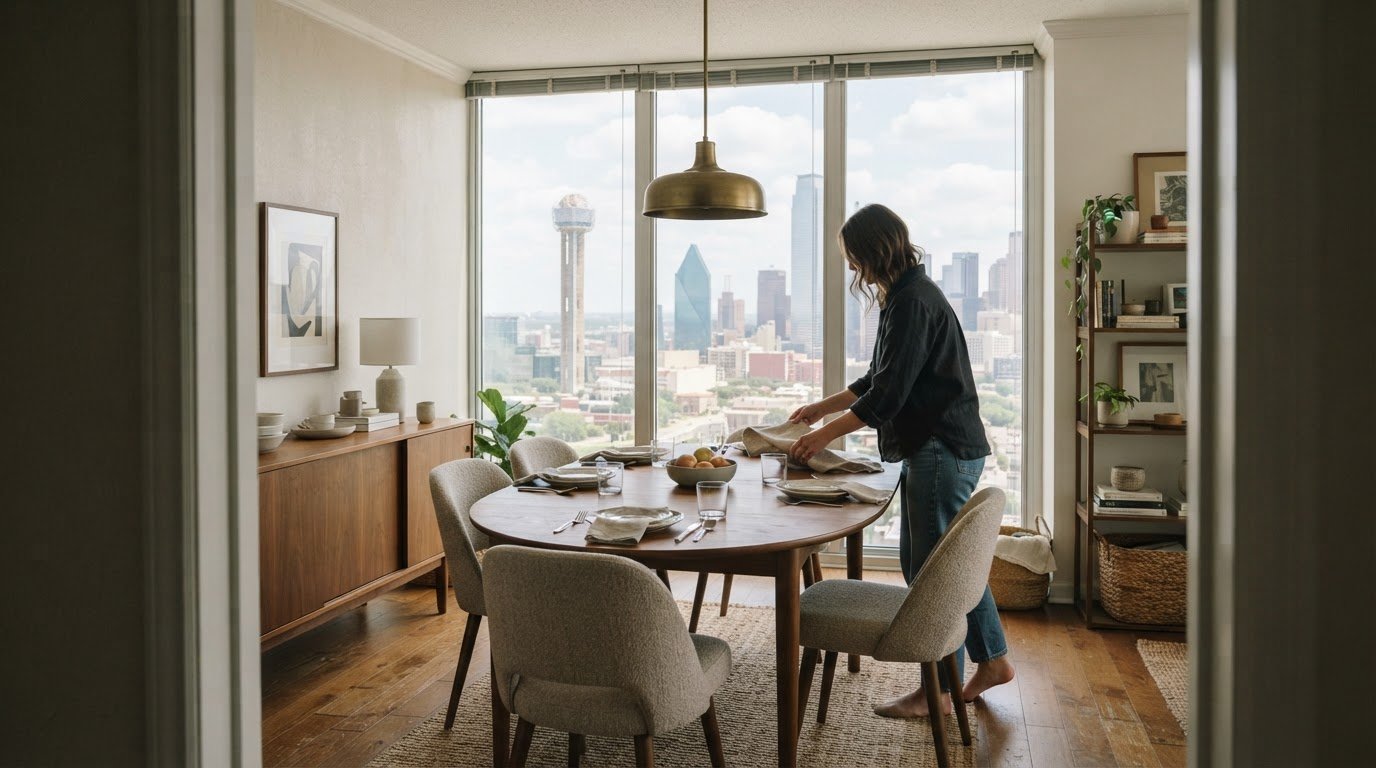
    Sculptural furniture can create a focal point without relying on decoration alone. A sculptural chaise can define a reading area, while a bespoke console can organize an entry and give it a visual anchor. In a dining room, an heirloom-quality table can establish the room’s scale and remain useful as chairs, lighting, or accessories change.

    Choose statement furniture for its form, comfort, and purpose, not simply its novelty. A substantial dining table may anchor a large space, while a distinctive chair can bring interest to a quieter corner. Leave surrounding pieces enough room for the statement piece to stand out. This balance keeps the arrangement refined and functional, even as individual furnishings are updated.
    Timeless Interior Design for Luxury Homes: What Makes It Last

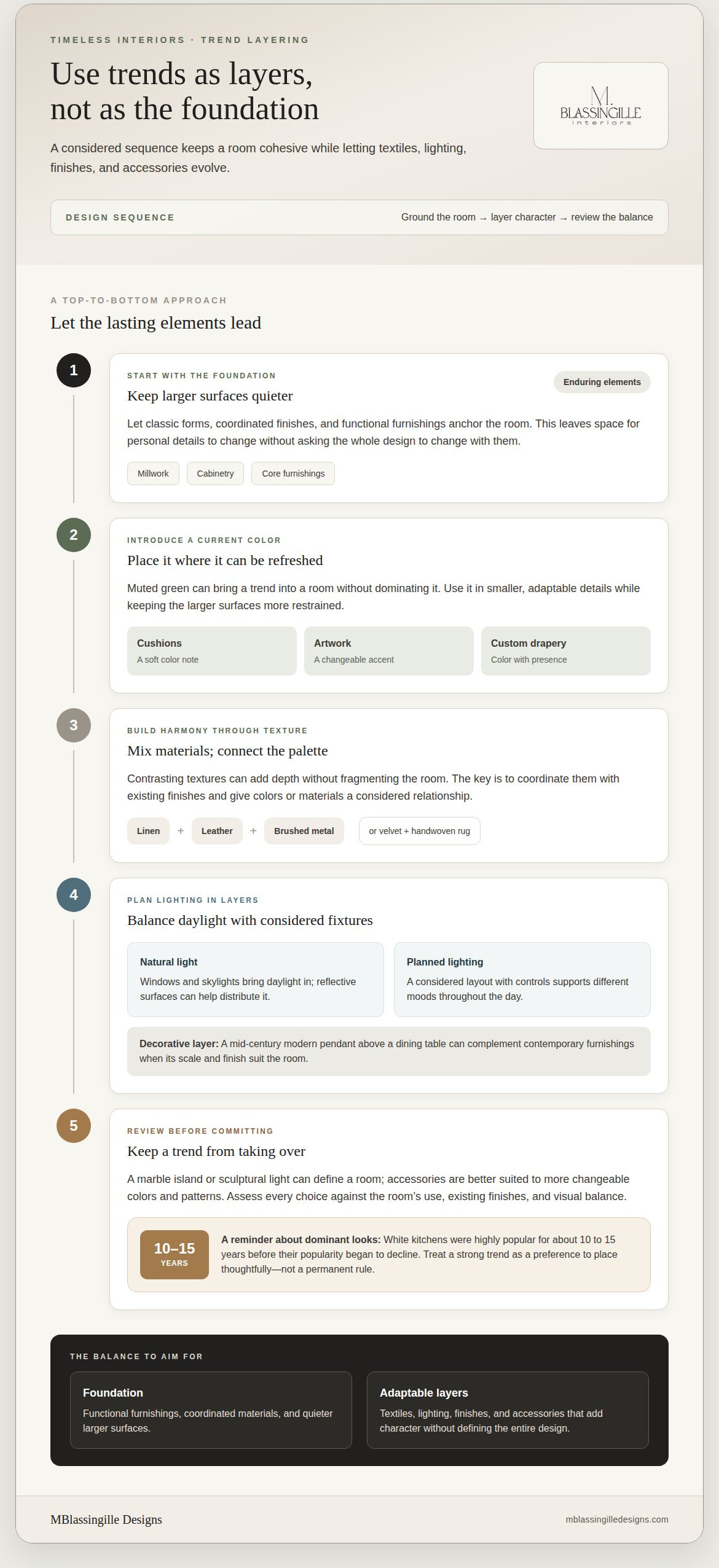
    Trends work best as adaptable layers within a coordinated design. Muted green, for example, might appear in living room cushions, artwork, or custom drapery, while larger surfaces stay quieter. Linen, leather, and brushed metal add contrasting textures without requiring changes to millwork or cabinetry. This approach lets a room evolve while maintaining harmony among its materials and furnishings.

    Some trend-led choices can date a room when they dominate every surface. White kitchens, for example, were highly popular for about 10 to 15 years before their popularity began to decline. Rather than treating a single look as a permanent rule, a designer considers how finishes work together and where a current preference belongs. A marble island or sculptural light can provide definition, while replaceable accessories carry more changeable colors and patterns.

    Lighting calls for both architectural planning and decorative intent. Thoughtfully placed windows and skylights bring natural light into interior spaces, while reflective surfaces can help distribute it. A planned lighting layout with controls supports different moods throughout the day. Decorative fixtures add character: a mid-century modern pendant above a dining table can complement contemporary furnishings when its scale and finish suit the room.

    Textiles and accessories offer a measured way to introduce bolder trends. Pair a velvet lounge chair with a handwoven rug, for instance, or use warm metals and curved furniture as focused accents. In a living room with abundant natural light, layered gray textiles can add depth without competing with the view. Assess each choice against the room’s use, existing finishes, and visual balance. The result feels current through considered details, not an accumulation of fashionable features.

    4. Quiet luxury and minimalist design

    Quiet luxury is not an empty room or a strict absence of detail. It uses minimalist principles to make each element purposeful, comfortable, and refined. In a beige living room, Belgian linen draperies and a tailored sofa can establish a calm foundation. Their natural texture softens the palette and accommodates the small imperfections of daily use.

    Restraint brings architecture into focus. A window, ceiling line, or well-proportioned millwork can remain the focal point when surrounding elements are simple. Warm white, greige, taupe, and charcoal provide flexible foundation colors. They let materials and proportions carry visual interest instead of relying on bold decoration.

    Minimalism still needs contrast. In an entry, white oak flooring, a painted wall, a mirror, and a buffet can create a clear composition. Leather-upholstered closet doors or a marble-and-metal console can add a refined detail without overwhelming the space. Giving each finish a defined role makes the overall balance feel considered rather than sparse.

    The same approach works in busier rooms. A dining room can pair a marble-topped table with a stainless-steel base and leather chairs. In a bedroom, linen bedding, floating bedside tables, and wall sconces keep the arrangement visually ordered. A wool-and-silk Tibetan rug adds softness underfoot while preserving the room’s composed character.

    The practical takeaway is to edit around the room’s strongest features. Preserve useful surfaces, allow comfortable movement, and select a few finishes that support the architecture. Quiet luxury feels personal through careful decisions, not through the number of objects in view. For a cohesive plan, shape a quiet luxury interior around the home’s proportions, materials, and daily use.

    MBlassingille Designs: Design

    MBlassingille Designs helps translate lasting design principles into a cohesive plan for your home. Design, Selections, and Consulting support decisions about furnishings, materials, finishes, and how each space works together. These services are useful when planning new construction or giving existing rooms a more considered direction in Dallas and the surrounding area.

    Rather than treating every room as a separate decision, a unified design process aligns the home’s palette, proportions, and practical needs. Material selections create continuity, while furnishings and details reflect the people who live there. The result balances enduring elements with room for personal expression and future updates.

    Contact MBlassingille Designs to discuss design for your home.

    Shape a home around what matters next

    A useful next step is to define what timeless interior design for luxury homes should support in your daily life. Consider how the home needs to function now, which spaces may change, and what atmosphere should endure. These priorities give design decisions a practical reference point, helping the finished home feel personal rather than shaped by passing preferences.

    A thoughtful plan can turn those priorities into a clear direction for the home. If you’re ready to explore the possibilities, contact MBlassingille Designs to discuss your project. A considered beginning makes it easier to align the vision with the details that bring it to life. Move forward at a pace that suits your project, with a home shaped around the way you want to live.

    Frequently Asked Questions

    What Makes Interior Design Timeless?

    Timeless interior design balances visual character with the way a home is used. A room should suit its architecture, support daily routines, and make personal objects feel at home. For example, a collection of art can bring individuality to a restrained room without requiring permanent changes to built-in finishes. Lasting quality comes from how decisions work together, not from following one fixed style.

    How do you make a luxury home look timeless?

    Coordinate the home’s overall direction before settling on individual rooms. Consider how sightlines, flooring, wall finishes, and joinery connect from one space to the next. In an open-plan home, a consistent material or repeated finish can create continuity, while artwork and smaller decorative pieces add variation. A designer can translate these priorities into selections suited to the home’s architecture and intended use.

    Are there any colour palettes you stick to?

    No single palette suits every home. The right colors depend on the architecture, natural light, existing finishes, and the atmosphere residents want. A restrained base makes it easier to introduce personal color through artwork or textiles, then adjust those accents over time. Reviewing colors together in the actual rooms helps account for nearby materials and changing light, which affect how each shade appears.

    Are there any furniture arrangements which don’t ever age?

    No arrangement works equally well in every room. A layout should account for doorways, windows, focal points, and how people use the space. Seating might face a view in one living room and a fireplace in another. A designer considers these relationships alongside furniture scale so pieces feel proportionate and the room remains easy to move through.

    What should you consider when working with a designer to choose decor and art that won’t go out of style?

    Share how you want the home to feel and how you use each room. When choosing art and decor, consider scale, placement, color relationships, and personal meaning. A large artwork may need a quieter wall, while a group of smaller works can connect through a shared frame or palette. A designer can align these choices with the room’s finishes and furnishings.

    What colors never go out of style in high-end interiors?

    No color is guaranteed to feel right forever, but adaptable foundation colors can give a room lasting appeal. Warm whites, greige, taupe, and charcoal work with a range of materials and furnishings. Personal colors can appear in details that are easier to change, such as a throw or artwork. The best choice depends on the room’s light and surrounding finishes, not a universal rule.
  • How to Make Confident Home Design Decisions for a Room That Feels Right

    How to Make Confident Home Design Decisions for a Room That Feels Right

    A room that feels right rarely comes from one perfect choice. Confident home design decisions start with a clear sequence: define what the room needs to do, decide how you want it to feel, and let those priorities guide each selection. Considering how furnishings, finishes, and materials work together can help you plan ahead, especially for choices that are harder to change later.

    It’s easy to second-guess a room when inspiration, personal taste, and practical needs compete for attention. Start with how you live in the space, then use the details you’re drawn to as clues to what suits you. A clear starting point makes the process more manageable.

    This guide explains how to clarify a room’s purpose, use inspiration without copying it, and identify your style by noticing what you do and don’t like. You’ll also find practical ways to plan upcoming design decisions, so each choice has a reason and contributes to a cohesive result.

    Key Takeaways

    • Start with how the room needs to function and the atmosphere you want it to create.
    • Use inspiration images to spot details that appeal to you, then adapt them to your own home.
    • Notice which colors, materials, and furniture styles you consistently dislike to narrow your preferences.
    • Plan key selections early and use clear priorities to make upcoming decisions more cohesive.

    1. Clarifying the room’s purpose and desired feel

    Start with a practical inventory: spend 10 minutes walking through a typical day at home. Note where people gather, work, rest, and store everyday items. A living room used for reading and evening conversation needs different seating and lighting than one used for children’s play. This first thought connects the room’s purpose to its layout, giving confident home design decisions a clear foundation rather than starting with a paint color.

    Next, describe the room’s desired feel with a few specific words, such as calm, open, or grounded. Then identify who uses the space and which activities it needs to support. The home’s orientation and room placement can shape these choices: a bedroom facing a busy street may need more privacy, while a kitchen near the main entrance may benefit from storage for everyday items. Defining function and feeling together supports confident home design decisions throughout the project.

    How do you compare home design styles, materials, and finishes? Use the room’s purpose and desired atmosphere as filters. For a relaxed reading corner, compare chairs, wood finishes, and lighting for comfort, maintenance, and the calm feeling they create. View samples together in the room, where existing colors and natural light affect how they look. Choose a combination that suits the intended use rather than judging each finish on its own.

    What building codes, permits, and accessibility rules affect home design in my area? Requirements depend on location and project scope. Identify applicable rules early, before finalizing layouts or selecting finishes, so the design can account for them from the start.

    Then plan the room around movement, light, and storage. Sketch where doors open, where people walk, and which items need a set place. In a home office, for example, leave a clear route to the desk and plan storage for frequently used supplies. Consider how daylight enters and where task lighting is needed. Breaking the work into purpose, feeling, and layout makes decisions less overwhelming and gives each selection a clear role.

    2. Using personal inspiration to guide design choices

    Gather images of rooms, materials, and details you genuinely respond to. Rather than copying one photograph, note what attracts you: a quiet color palette, a sculptural light, or natural wood. These observations turn inspiration into useful criteria. If several saved rooms pair simple forms with textured fabrics, for example, that recurring preference can guide your choices without requiring an exact replica.

    Use a floor plan to test furniture placement and circulation, samples to compare finishes in the room, and a 3D visualization to see how elements relate. Together, these tools help reveal whether a preferred color or material supports the space before selections are finalized. They also make it easier to know where a bold detail fits within the broader composition.

    How can you choose a qualified architect, interior designer, or contractor? Begin by defining the work: architectural planning, construction, and interior design involve different scopes. For interior design decisions, look for relevant experience with layout, materials, and finishes, and make sure the project’s priorities are clearly understood.

    Set a project budget based on the room’s size, existing furnishings, and necessary changes. Include shipping, repairs, and sales tax, then rank priorities instead of expecting every item to meet every goal. For sustainable choices, consider durability, repair, and whether a material suits the room’s actual use. A well-made table that can be maintained may be more useful than replacing several pieces just to create a matching look.

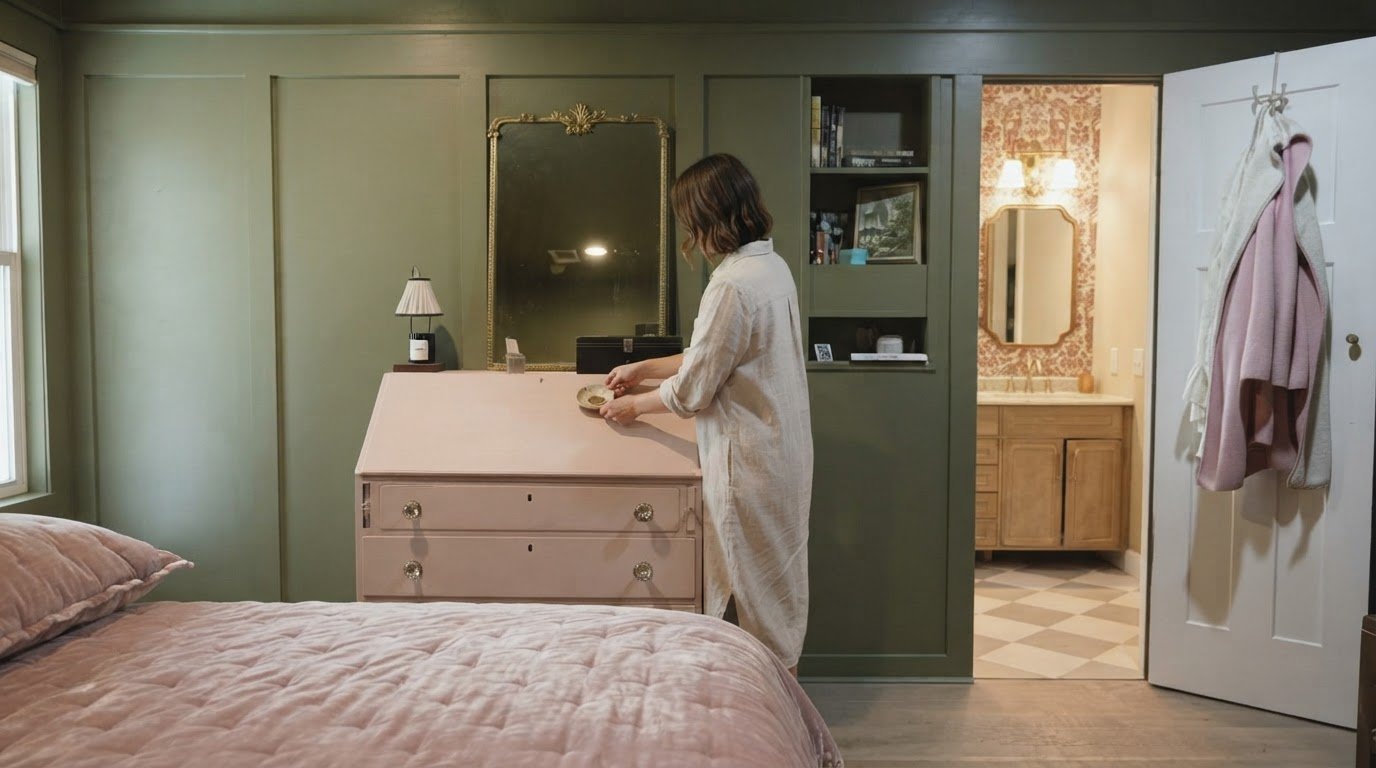
    Try expressive ideas in contained spaces such as a powder room, entryway, or tucked-away hallway. A strong wallpaper or painted wall can test your preference for color without setting the tone for every room. Keep one prominent idea and support it with quieter finishes. For a focused design process, design guidance for your space can help connect inspiration to purposeful selections.

    How to Make Confident Home Design Decisions for a Room That Feels Right

    3. Using process of elimination to identify personal style

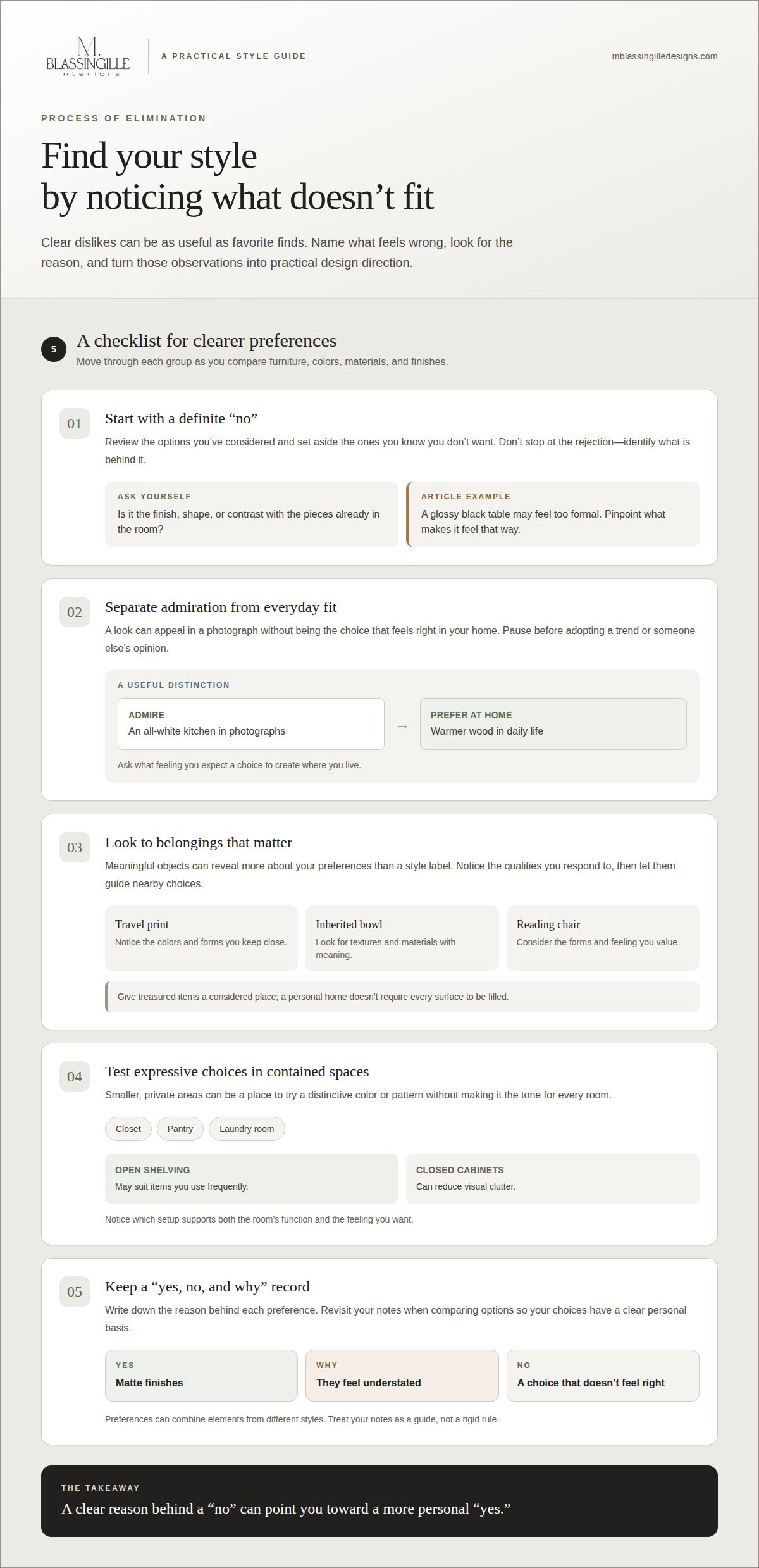
    Start with what you don’t want. Review furniture, colors, and materials you’ve considered, then set aside definite dislikes. If a glossy black table feels too formal, identify whether the issue is its finish, shape, or contrast with existing pieces. Naming the reason turns a rejection into a useful preference. Repeat the process with fabrics and lighting to reduce guesswork and reveal patterns.

    Personal taste can be shaped by familiarity, current trends, and opinions from family or friends. Pause before adopting a popular look and ask what feeling you expect it to create at home. You may admire an all-white kitchen in photographs but prefer warmer wood in daily life. Recognizing the difference helps separate visual admiration from a choice that suits you.

    Meaningful belongings can offer clearer guidance than a style label. A framed travel print, an inherited ceramic bowl, or a well-used reading chair can reveal which colors, textures, and forms matter to you. Identify the qualities these objects share, then use them to guide surrounding selections. A home feels personal when treasured items have a considered place, not when every surface is filled.

    Use private, contained spaces to test your preferences. A closet, pantry, or laundry room can accommodate a distinctive paint color or patterned storage without the same commitment as a main living area. These spaces also call for practical choices: open shelving may suit frequently used items, while closed cabinets can reduce visual clutter. Notice which arrangement supports both the room’s function and your preferred feeling.

    Keep a short “yes,” “no,” and “why” record as you make selections. For instance, “yes to matte finishes because they feel understated” is more useful than “like modern style.” Revisit your notes when comparing options. Personal style can combine elements rather than fit one category, so treat recorded preferences as a guide, not a rigid rule. This makes each choice more deliberate.

    4. Anticipating design decisions

    In a new build, deciding on finishes before construction begins helps align selections with the planned spaces. First identify pain points in your current home, such as a crowded entry, limited pantry storage, or a dim work area. Record which issues the next home should solve. Separate must-haves, such as a dedicated work surface, from nice-to-haves, such as decorative shelving. Planning ahead supports confident home design decisions because each choice responds to a defined need, not an urgent deadline.

    Some choices become harder to revise once related work is complete. Changing a layout after walls, electrical locations, or built-in storage are settled can affect other selections. Common mistakes include approving a plan without considering daily circulation, overlooking storage needs, and choosing finishes without viewing them alongside the broader palette. Map key activities and note dependencies before approving major decisions, especially when one choice affects another.

    Before approving a design or signing a contract, ask what the scope includes, which decisions remain, and when selections are due. Clarify how approvals, revisions, and coordination are handled, then make sure the written agreement reflects the work you understand. These questions set clear expectations and help identify gaps before you commit.

    For each choice, weigh style, quality, availability, and cost against the project’s priorities. Decide which factors matter most for that item, then move forward instead of reopening the same comparison indefinitely. Allow time to consider how major selections relate. A limited palette and a consistent family of materials can create cohesion across rooms. This sequence makes confident home design decisions more deliberate, even when you’re not certain about every detail.

    When you’re ready to organize selections around your project’s needs, plan your design decisions with professional design guidance.

    MBlassingille Designs: Design

    MBlassingille Designs helps homeowners in Dallas bring room priorities into a cohesive direction through Design, Selections, and Consulting. When inspiration, function, and material choices need to align, Melissa Blassingille provides a single point of contact from the initial vision through the finished home.

    For new construction, planning selections early helps establish how rooms, finishes, and furnishings relate before decisions accumulate. For an existing home, design guidance can clarify what to retain, what to change, and how each choice supports the way you live. MBlassingille Designs offers space planning, material and finish selections, furnishings, styling, and installation, connecting a room’s purpose with its overall character.

    To discuss design guidance for your home, contact MBlassingille Designs.

    Carry Your Vision Into the Next Decision

    A room’s design is easier to manage when your preferences are recorded in a useful form. Create a brief that captures the atmosphere you want, practical requirements, and the qualities you’re willing to prioritize. Keep it nearby as the project develops. When a new option comes up, compare it with the brief instead of starting from scratch.

    That reference point can also help you communicate your intent clearly and keep individual choices connected to the whole home. You don’t need certainty about every detail before taking the next step. A clear direction gives you room to refine decisions as the design takes shape, while keeping your attention on what matters most.

    For support translating your priorities into a coordinated design, begin a conversation with MBlassingille Designs. Move forward with a clear point of view, one considered decision at a time.

    Frequently Asked Questions

    Bottom Line: The Best Way to Build Without Regrets?

    Make major decisions in a deliberate order, connecting each selection to how you’ll use the home. Before approving a feature, consider its daily function, maintenance, and relationship to nearby rooms. For example, evaluate a kitchen surface alongside cabinetry and lighting, and consider how the space will be used rather than judging a sample alone. No plan removes every uncertainty, but a clear process helps limit avoidable changes.

    How do you define goals and priorities before designing a home?

    Write down the outcomes the home must support, then rank them by importance. A household that works from home might prioritize a quiet workspace, while frequent guests may need flexible sleeping arrangements. Separate essential requirements from preferences, and record who will use each space. For a new home in Dallas, also consider how the project’s intended use and site conditions shape those priorities.

    How can you create a realistic home design budget, including contingency costs?

    List the project scope, furnishings to keep, and planned purchases. Separate required work from optional upgrades, then account for materials, delivery, taxes, and possible repairs. Keep a contingency reserve within the overall budget for unexpected conditions rather than assigning every available dollar to visible finishes. Review the plan as selections develop, since changes to scope or materials can affect spending.

    What are typical costs for home design, remodeling, and interior design in the United States?

    Costs depend on project scope, location, room size, material selections, and the extent of remodeling. Interior design may involve a focused consultation or broader design work, while remodeling also involves construction-related work and materials. These are different scopes, so compare proposals by what each includes rather than relying on a single typical figure. For a project in Dallas, location and project requirements shape the budget.

    How can you make home design decisions that improve resale value and energy efficiency?

    Prioritize durable, versatile choices and consider efficiency as part of the home’s overall performance. For example, think about daylight, insulation, lighting, and how rooms are used before choosing finishes. Avoid assuming a highly personal upgrade will appeal to every future buyer. A balanced approach can support daily comfort while keeping the home’s materials and layout coherent as needs change.