
The most striking slab isn’t automatically the best countertop for your home. The right stone and countertop selections balance appearance with daily use, maintenance, placement, and budget. Granite, quartz, quartzite, marble, and porcelain each have different strengths, so the best fit depends on how the surface needs to perform.
Natural stone has a quality manufactured surfaces can’t reproduce exactly: every slab is unique. That variation makes choosing a specific slab part of the design decision, along with practical considerations such as thickness and weight.
This guide compares five materials, explains which trade-offs matter for different lifestyles and spaces, and shows how to consider the full cost of a selection rather than appearance alone. It also explains why reserving a chosen slab can help preserve the intended look of the finished design.
Key Takeaways
- Match the surface to how the room is used: heat, staining, scratching, sunlight, and ongoing care affect which material is the practical fit.
- Natural stone varies from slab to slab, so viewing the specific piece helps align its color and pattern with the design.
- Consider the full project budget, including the material, installation, and upkeep, rather than judging a countertop by its initial cost alone.
- Professional selection guidance can coordinate the material, finish, and slab choice with your lifestyle, location, and broader design plans.
Granite, quartz, quartzite, marble, and porcelain properties
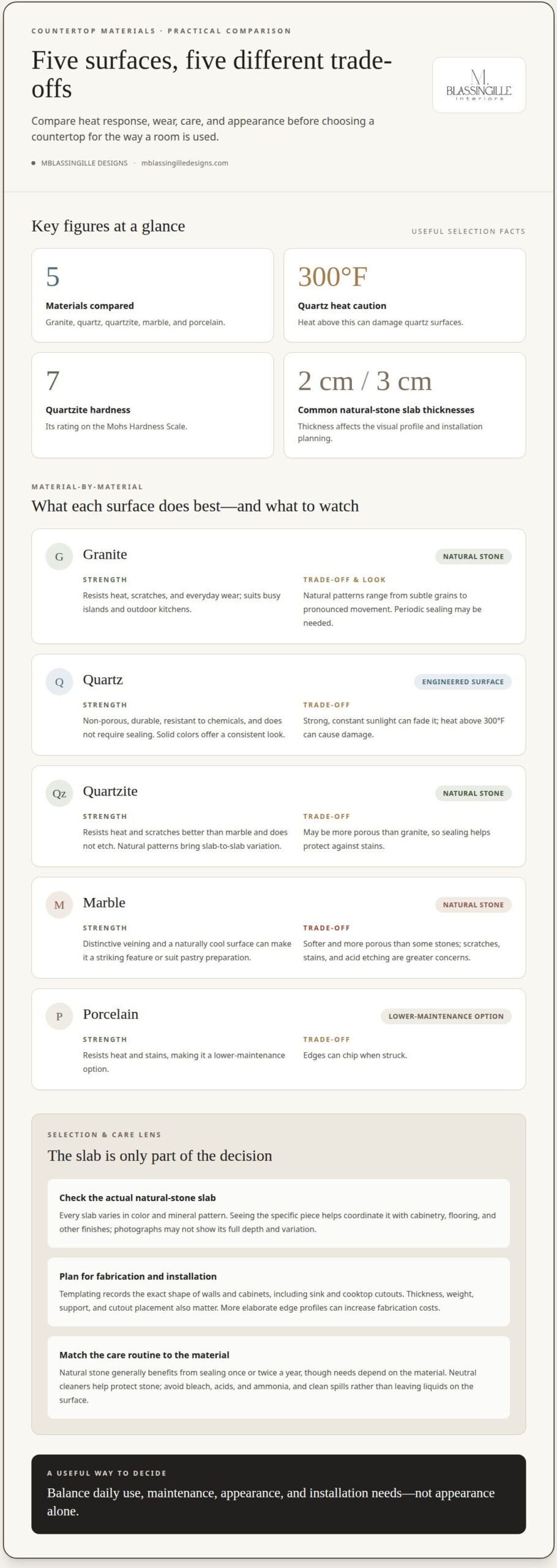
Stone and countertop selections involve trade-offs in durability, maintenance, heat response, and visual variation. This table compares practical differences that matter in a kitchen.
Granite Properties
Granite is an igneous natural stone valued for its resistance to heat, scratches, and everyday wear. Its patterns range from subtle grains to pronounced mineral movement, and its colors include pink, gray, red, green, and blue. Unlike quartz, granite is natural and generally less porous than some other stones, though it may need periodic sealing. Its durability suits kitchen counters, busy islands, and outdoor kitchens.
Quartz Properties
Quartz countertops combine natural quartz mineral with manmade polymers, creating a non-porous surface that doesn’t require sealing. Pure white and solid colors offer a more consistent appearance than granite’s natural patterns. Quartz is durable and resistant to chemicals, but strong, constant sunlight can fade it, and heat above 300°F can damage it. Granite better tolerates hot cookware, while quartz reduces routine sealing needs.
Quartzite Properties
Quartzite is a natural stone formed from sandstone and containing quartz. It resists heat and scratches better than marble, and it doesn’t etch. Its hardness rating is 7 on the Mohs Hardness Scale. Compared with granite, quartzite may be more porous, so sealing helps protect it from stains. Its natural patterns provide variation, while its care needs distinguish it from non-porous quartz.
Marble Properties
Marble is known for distinctive veining and a striking white backdrop, making each slab a visual feature. It is softer and more porous than some other countertop stones, so scratches and stains are greater concerns. Acids can etch marble, making it less forgiving in a busy kitchen than granite or quartzite. Its naturally cool surface can suit pastry preparation, while bathroom vanities and statement areas typically see less kitchen wear.
| Material | Heat and wear | Care and appearance |
|---|---|---|
| Granite | Resists heat and scratches | Natural patterns; periodic sealing |
| Quartz | Heat-sensitive above 300°F | Non-porous; solid colors |
| Quartzite | Resists heat and scratches | Natural patterns; sealing |
| Marble | Prone to scratches and etching | Veining; more porous |
| Porcelain | Resists heat and stains; edges can chip | Lower-maintenance option |
Common risks vary by material: marble can stain or etch, quartz can be damaged by heat, and porcelain edges can chip when struck. Careful fabrication, support, and installation planning also help address the risk of cracking.
A design professional can align material choices with reputable local suppliers and installers. Clients can ask which surface fits their use, what care it needs, and how slab patterns and cutouts will align.
A practical approach to stone and countertop selections considers daily use, maintenance, appearance, and installation needs together.
What Makes Natural Stone Unique?
Natural stone forms over millions of years, giving each slab its own mineral pattern and color variation. That distinctive character also informs selection, fabrication, and ongoing care.
Natural Stone Characteristics
Unlike manufactured surfaces with more consistent patterns, natural stone countertops vary from slab to slab. Seeing the actual piece helps a design professional coordinate its colors and movement with cabinetry, flooring, and other finishes. Slabs commonly come in 2 cm or 3 cm thicknesses, which affects the visual profile and planning for the installation. For a bathroom vanity, a quieter pattern may support a calm material palette.
Natural Stone Types
Granite, marble, and quartzite are familiar options, but natural stone also includes soapstone, onyx, travertine, dolomite, sandstone, and limestone. Their properties vary: soapstone resists stains but scratches more easily, while limestone is vulnerable to acid etching. Onyx’s translucence can work with under-counter lighting. A design professional can weigh these differences against the room, intended use, and maintenance preferences.
Natural stone processing turns a selected slab into a planned surface. Templating records the exact shape of walls and cabinets, including sink and cooktop cutouts, to guide fabrication and fit. Viewing slabs in person can also reveal depth and pattern variation that photographs may not show.
Finishes and Edge Profiles
Honed and leathered finishes offer alternatives to a polished look, each with its own surface character and texture. Edge profiles shape the countertop’s perimeter and influence its overall presence. More elaborate profiles can increase fabrication costs, so consider their effect alongside the material and project budget.
For routine care, neutral cleaners help protect natural stone; avoid bleach, acids, and ammonia. Clean spills rather than leaving liquids on the surface, since they can seep in over time. Natural stone countertops generally benefit from sealing once or twice a year, though care depends on the material. For coordinated natural-stone design guidance, bring the slab’s pattern, room finishes, and intended use into the same selection discussion.
How a design professional helps clients choose countertops based on lifestyle, location, and budget
A design professional starts with how the room will be used, not with a material trend. Cooking habits, cleaning preferences, sunlight, and project scope help narrow the options. A kitchen used for frequent meal preparation has different priorities from a bathroom vanity or lightly used bar.
For active cooking, weigh heat, scratches, stains, and maintenance together. Granite resists heat and everyday wear, while quartz needs protection from hot cookware and strong, sustained sunlight. Marble can etch when acids touch its softer surface, making it less suited to a kitchen where spills are common. Quartzite resists heat and scratches, but its porosity means sealing is part of its care plan.
Lifestyle also guides the desired appearance. A household that prefers a consistent, neutral palette may favor quartz’s solid-color options. Those seeking natural variation may consider granite or quartzite, then coordinate the slab’s patterns with cabinetry and flooring. For a statement surface that sees less intensive use, marble’s veining may matter more than low-maintenance performance.
Placement affects which material is suitable. A countertop exposed to strong, sustained sunlight calls for attention to quartz’s potential to fade. Outdoor kitchens need a surface suited to exposure and use, making granite’s resistance to heat and everyday wear relevant. Consider the countertop’s location as part of the overall design.
Budget planning accounts for the slab, installation, and upkeep. Slab grade and pattern selection affect material cost; thickness influences the amount of material and fabrication requirements. Edge profiles can change the fabrication scope, while installation planning includes the countertop’s dimensions and sink or cooktop cutouts. A design professional brings these factors into one comparison, so the chosen material and finish align with the project’s priorities.
Selecting and reserving a stone slab with guidance from a design professional
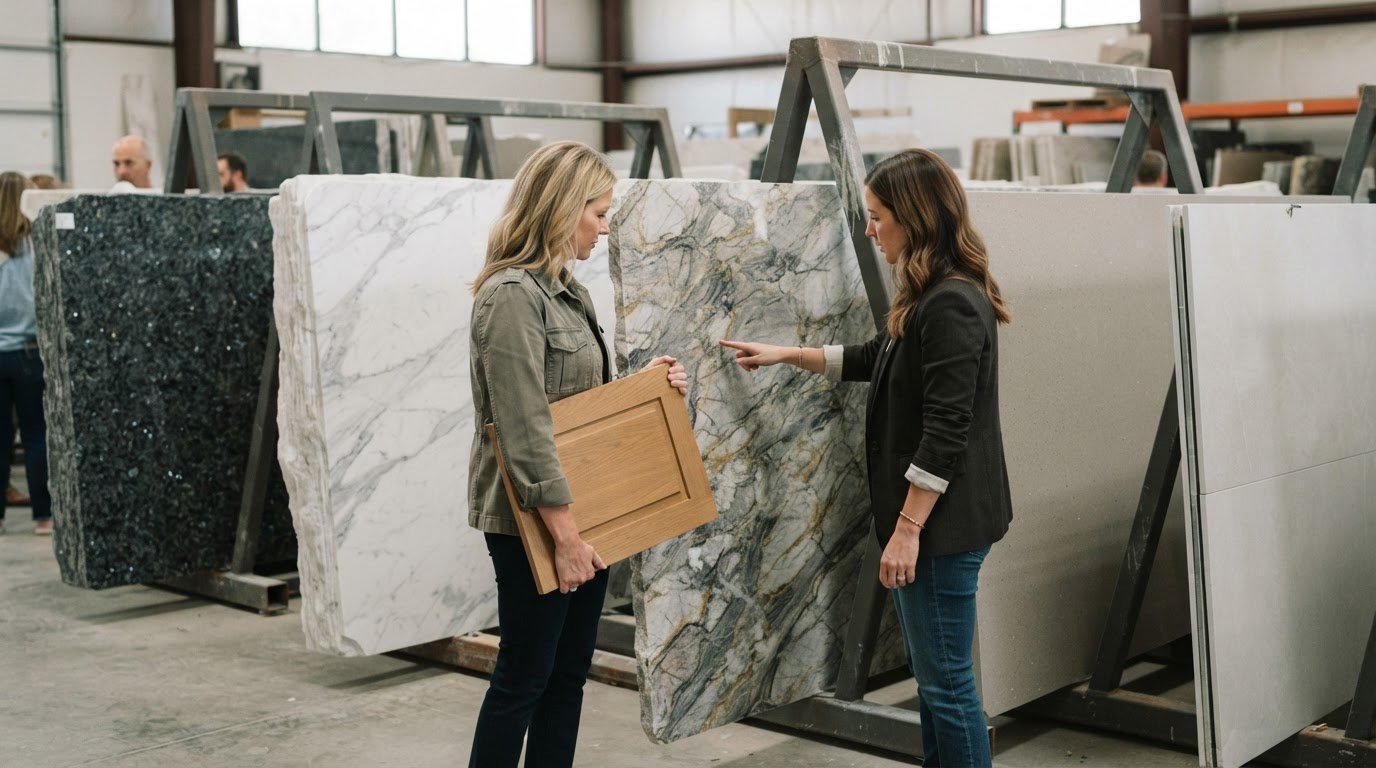
A natural stone slab is a specific piece, not a repeatable sample. Veining, color shifts, and mineral movement can vary from photographs or other slabs in the same collection. Seeing the actual surface helps you assess how its details will work with the room’s cabinetry, flooring, and countertop layout.
A design professional starts with the project drawings and finish palette, then evaluates slabs for pattern placement and practical use. A strong vein, for example, can become a focal point across an island, while quieter movement may suit a smaller vanity. The review also considers the stone’s porosity and whether its maintenance needs fit the household.
Before a selection is finalized, the design professional coordinates the chosen slab with the planned fabrication. Countertop templating records the exact shape of walls and cabinets, including sink and cooktop cutouts, so the fabricated piece can fit. The slab’s dimensions, thickness, and layout matter because they can affect fabrication and installation.
Coordinate slab reservation with the project sequence. A design professional can align the selection with the schedule and the people handling fabrication and installation, reducing the risk that a substitute will change the intended look. Quartzite, for example, may offer natural veining and heat resistance, while engineered quartz can provide a more consistent pattern and the look of marble. Both the material’s properties and the specific slab matter.
Keep the slab selection connected to the design plan: identify the chosen piece, coordinate its pattern with the layout, and align fabrication planning before installation. That sequence helps protect the intended material and visual composition. For guided stone slab selection and design, begin with the room’s finishes, dimensions, and intended use.
MBlassingille Designs: Selections
MBlassingille Designs brings countertop decisions into alignment with the wider interior through design, selections, and consulting. Turn to the studio when material properties, slab patterns, room finishes, and daily use need to come together as part of one considered design.
For new construction, early selection guidance can coordinate countertop choices with the broader project design. For a remodel, the same process can connect a new surface with existing elements and planned changes. The aim is a considered fit between material, function, and the finished space.
Contact MBlassingille Designs to discuss countertop selections for your project.
Move from material options to a considered selection
The next step is to turn your preferences into a clear direction for the room. Decide which qualities matter most: a particular look, simpler maintenance, or a surface suited to frequent use. Naming those priorities gives the design conversation a practical starting point and helps keep the countertop aligned with the wider project.
Stone and countertop selections work best when the chosen surface suits both the room’s purpose and its overall composition. A design professional can translate your priorities into a cohesive material decision, whether you’re planning a new space or a renovation. Rather than choosing a surface in isolation, make a decision that feels intentional in the finished home.
Discuss your countertop direction with MBlassingille Designs and take the next step toward a well-considered space.
Frequently Asked Questions
What countertop materials are available, including granite, quartz, marble, quartzite, and porcelain?
Countertop options include natural stones such as granite, marble, and quartzite, as well as engineered quartz and porcelain. Other natural stones include soapstone, travertine, limestone, and onyx. The right category depends on the room’s use and the desired appearance. An island, for example, can serve as a visual focal point, while a bathroom vanity may call for finishes coordinated with tile and plumbing fixtures.
How do granite, quartz, marble, quartzite, and porcelain countertops compare in durability and maintenance?
Materials respond differently to heat, impact, acids, and routine care. Porcelain resists stains and heat, though its edges can chip if struck. Granite handles heavy use but may need periodic sealing. Quartz does not require sealing, but heat and sustained sunlight can affect it. Marble needs care around acids and spills. Quartzite resists heat and scratches, with sealing included in its maintenance routine.
What are the pros and cons of natural stone versus engineered stone countertops?
Natural stone offers individual veining and variation, tying the installed surface to a specific slab. However, porosity and care requirements differ by stone. Engineered quartz has a more consistent pattern across pieces and does not require sealing, but heat and strong, constant sunlight can be concerns. Compare visual variation with consistency, maintenance, and placement.
How much do stone countertops cost per square foot installed in the United States?
There isn’t one installed cost per square foot that applies to every stone countertop. The total depends on the selected material and slab, the countertop dimensions, fabrication details, edge profile, cutouts, installation, and ongoing upkeep. A small vanity with a straightforward edge differs from a large kitchen with an island and multiple cutouts. Compare the full project scope, not the slab alone.
How can a design professional help choose a countertop color and pattern to match kitchen cabinets and flooring?
A design professional considers the countertop alongside cabinet finishes, flooring, backsplash, and room lighting. In a Dallas kitchen with warm wood cabinets and patterned flooring, for example, a quieter surface might balance the existing elements. Reviewing samples together helps clarify undertones and pattern scale. The goal is a coordinated palette, with the countertop adding definition without competing with other finishes.
How can I find reputable local countertop suppliers and installers, and what questions should I ask?
A design professional can help connect your material choice with reputable local suppliers and installers. Ask which surface fits your use and care preferences, and how the slab’s pattern and sink or cooktop cutouts will align with the design.