Free in-store design can suit a room you’re furnishing with a retailer’s products; a paid interior design consultant can help with planning across a broader space. The choice between free design at a retail furniture store and a paid interior design consultant depends on the scope of help you need, not just the fee. One service may focus on selecting and arranging furniture, while the other can address how the room works as a whole.
It’s reasonable to want clear guidance before choosing a design approach. This comparison explains what each option may involve, including home visits, room measurements, traffic paths, and space planning, so you can judge which level of support fits your project. A store-based consultation can help with a focused furniture purchase, while more comprehensive design input may suit a room or home with connected decisions. Consider the work ahead, the details that need coordination, and the outcome you want.
Key Takeaways
- Compare each design option by its scope: furniture selection and placement versus planning that considers the room as a whole.
- Understand how an in-home visit and accurate measurements can shape furniture choices before they reach the room.
- Learn how traffic paths and space planning affect whether a layout feels practical, not just visually balanced.
- Identify when a store consultation may be enough and when broader design, selections, or consulting support can help.
What is the difference between a paid interior designer and a free in-store designer?
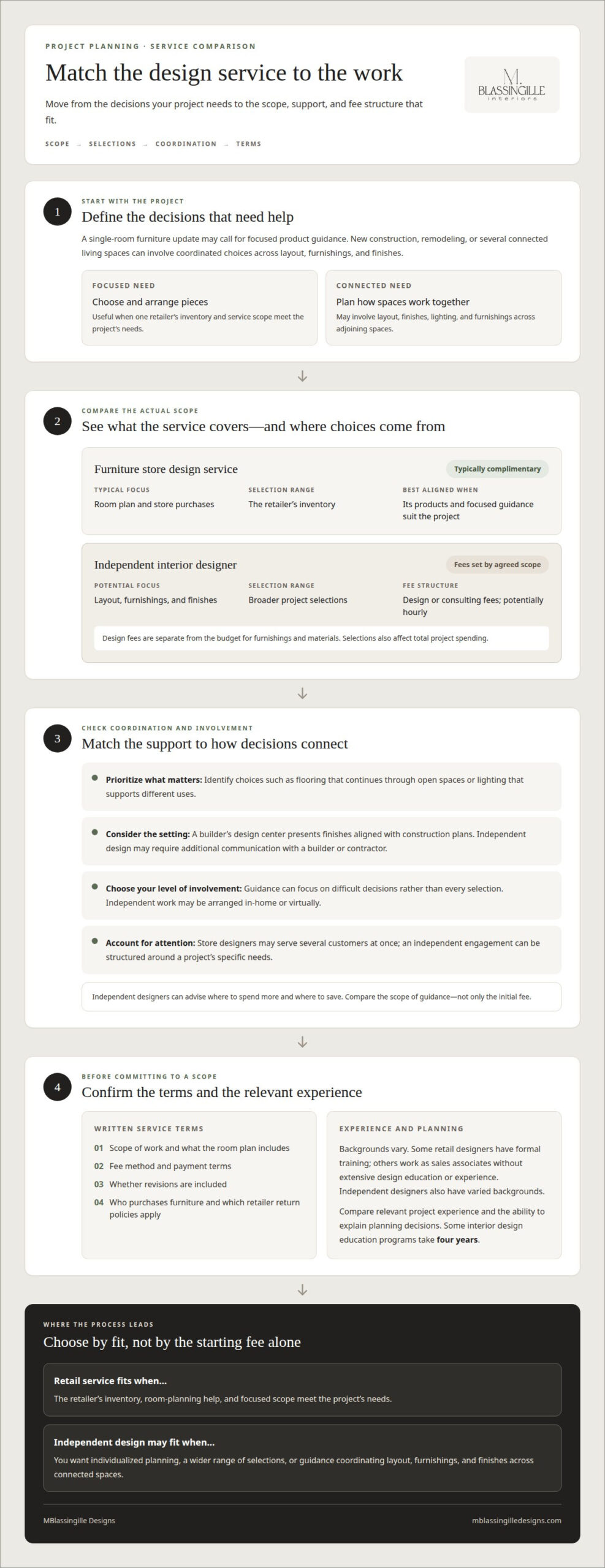
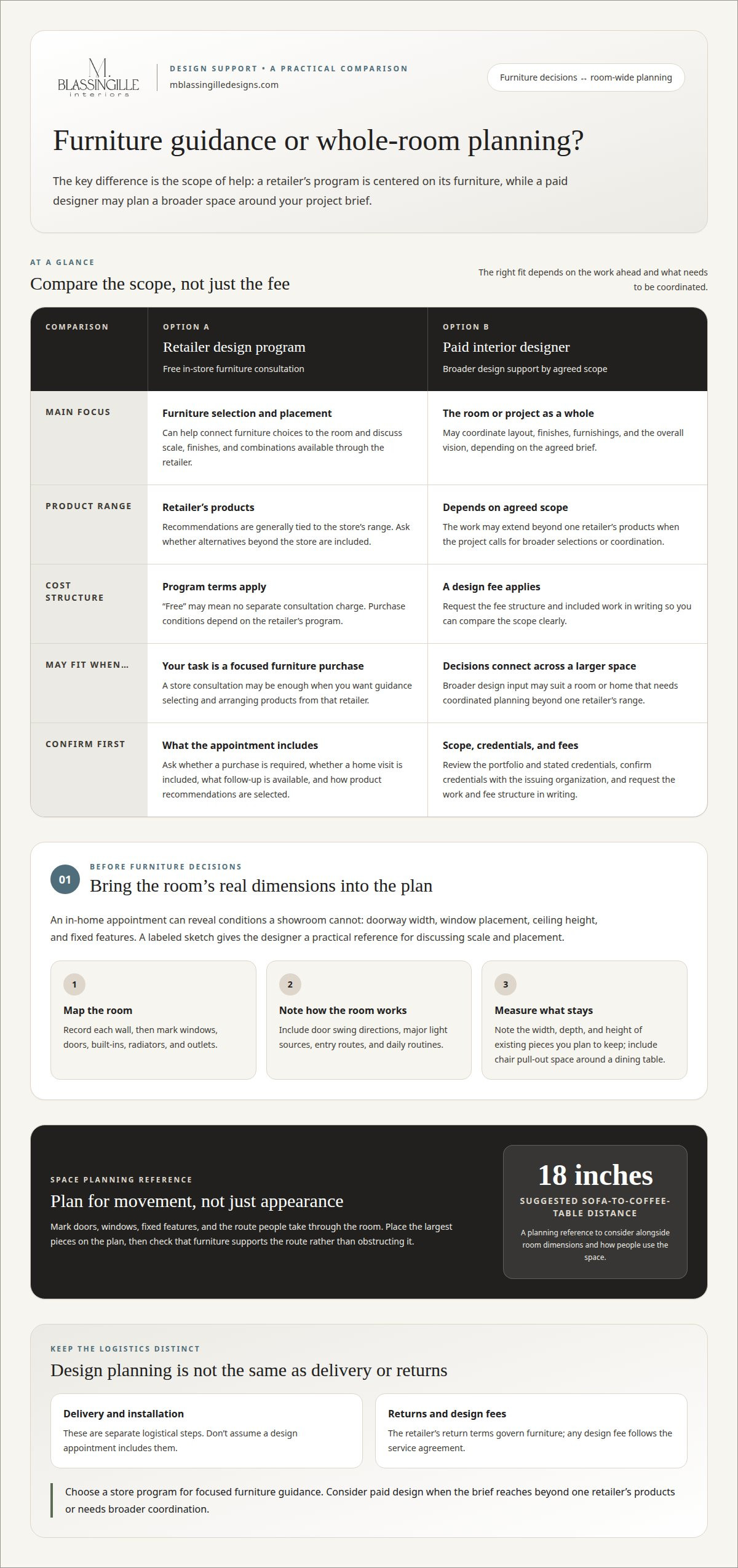
A furniture retailer’s complimentary design program typically connects furniture choices to products sold by that retailer. A paid interior designer may work from a broader project brief, coordinating the room’s layout, finishes, furnishings, and overall vision. The right fit depends on whether you need help selecting store products or shaping a cohesive space beyond one retailer’s range.
Free design services can suit a residential room where the main task is choosing furniture. A showroom designer can discuss scale, finishes, and combinations available through the retailer. Paid design services may cover residential or commercial projects, depending on the designer’s practice and agreed scope. They may also involve broader planning and coordination than a store-focused appointment.
Are furniture store consultations truly free, or do they require a purchase or minimum spend? “Free” may mean there is no separate consultation charge, but purchase conditions depend on the retailer’s program. Ask whether buying is required before booking. Do designers earn commissions or recommend only retailer products? Recommendations are generally tied to the store’s range, while compensation arrangements vary. Ask how products are selected and whether alternatives beyond the store are included.
Before booking, ask what the appointment includes, whether it covers a home visit, what follow-up is available, and whether a design fee applies. Also ask how return policies affect purchases. A consultation and a product return are separate matters: the retailer’s return terms govern furniture, while any design fee follows the service agreement.
To assess a paid designer in Dallas, review their portfolio and stated credentials, then confirm credentials with the issuing organization. Request the fee structure and included work in writing. That makes the comparison about scope, not just the word “free.”
| Option | Scope | Product range | Cost structure |
|---|---|---|---|
| Retailer design program | Furniture selection and placement | Retailer’s products | Program terms apply |
| Paid interior designer | Broader room or project planning | Depends on agreed scope | Design fee applies |
Choose a store program for focused furniture guidance; choose paid design when the brief extends beyond one retailer’s products or requires broader coordination.
Recommendations are generally tied to the retailer’s products, but whether designers earn commissions depends on the program.
In-home design visits and room measurements
An in-home appointment brings the room’s actual conditions into the design discussion. A showroom can suggest a sofa shape, but your home reveals doorway width, window placement, ceiling height, and fixed features that affect fit. Those details help distinguish a piece that looks right on display from one that suits the room.
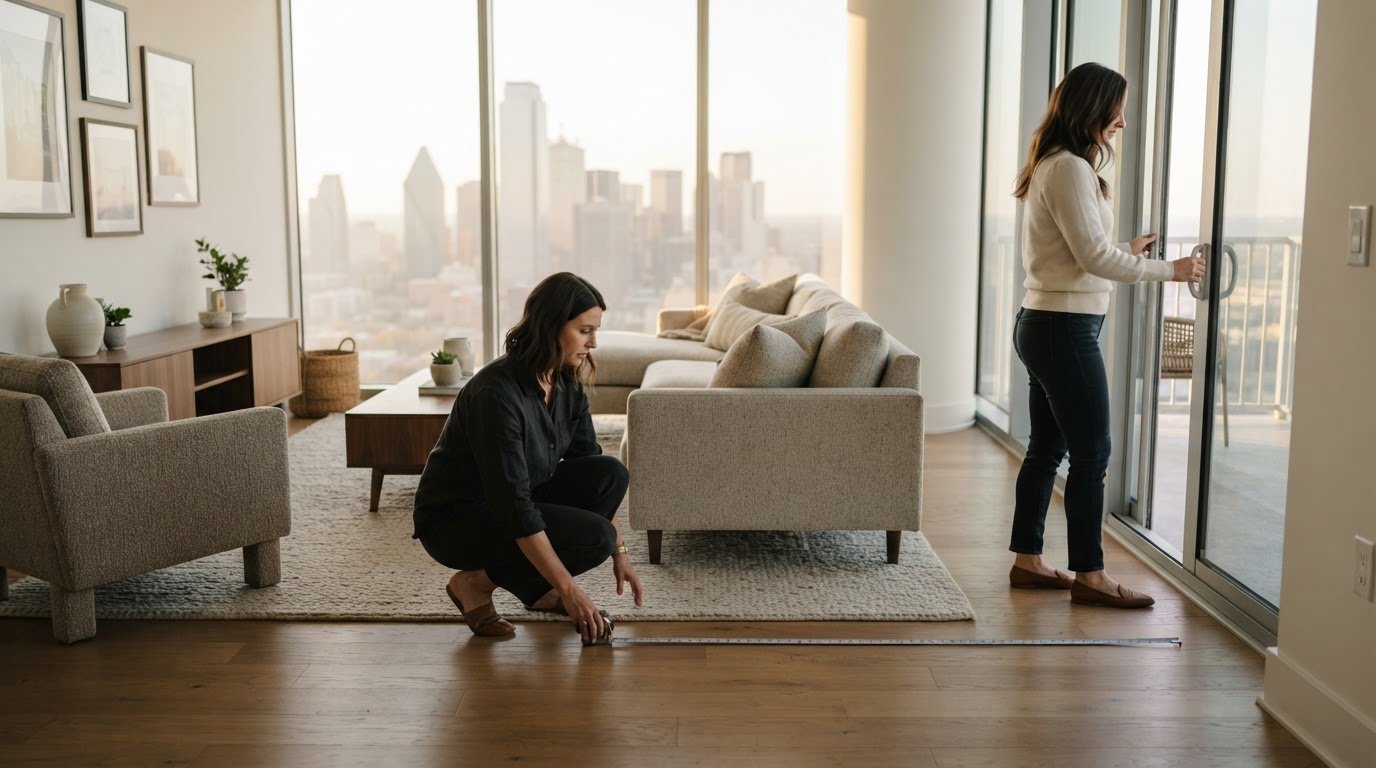
Before shopping, organize measurements in a clear sequence. Record each wall, then note windows, doors, built-ins, radiators, and outlets. Include the direction doors swing and the location of major light sources. A simple sketch labeled with these details gives the designer a practical reference for discussing furniture placement and scale.
Measure existing furniture too, especially pieces you want to keep. Note a sofa’s width, depth, and height, then compare them with candidate pieces. For a dining area, include the table and chairs, plus the space needed to pull chairs out. This turns “finding something beautiful” into a decision grounded in usable dimensions.
During an at-home consultation, a designer can see how people enter, move through, and use the space. Point out the route from the entry to the seating area, and mention daily routines that affect placement. For example, a family room used for reading and television needs a different arrangement from one mainly used for hosting. The appointment can connect your preferred look with practical room conditions.
After the visit, keep the sketch and measurements together with product dimensions and finish notes. That record supports more consistent decisions if shopping continues later. If you want measurements and selections considered as one plan, explore coordinated room planning.
Room measurements, traffic paths, and space planning
A useful floor plan starts with how a person enters and moves through the room. Mark doors, windows, built-ins, and fixed features, then map the route between them. In a living room, that path might run from the entry to a sofa, then continue toward a hallway. Furniture should support the route rather than obstruct it.
Next, place the largest pieces on the plan. A sofa’s width and depth shape the seating area; a dining table affects movement around nearby chairs. The suggested distance between a coffee table and a sofa is 18 inches. Treat that as a planning reference, then consider the room’s dimensions and how people use the space.
Can a furniture store designer help with measuring, floor plans, delivery, and installation? Measurements can inform furniture placement and a floor-plan proposal. Delivery and installation are separate logistical steps, not the same as space planning, so don’t assume a design appointment includes them.
Personalized styling works best when it follows the layout, not the other way around. For example, an initial plan might preserve a clear route through the living room before selecting a statement chair. Then the chair’s scale, upholstery, and position can support the vision without making circulation awkward or leaving the seating area disconnected.
Space planning also helps identify costly mismatches before a purchase. Compare each item’s dimensions with the available floor area, door openings, and intended position. A console may fit one wall but interfere with a door swing; a large sectional may dominate the room and narrow the path. A plan makes those trade-offs visible before you commit.
For a clear review, label the plan with furniture dimensions and mark the main walking routes. This gives the designer a practical basis for discussing scale, placement, and styling together. It also separates design decisions from the delivery and installation arrangements that follow.
Free in-store furniture design consultations
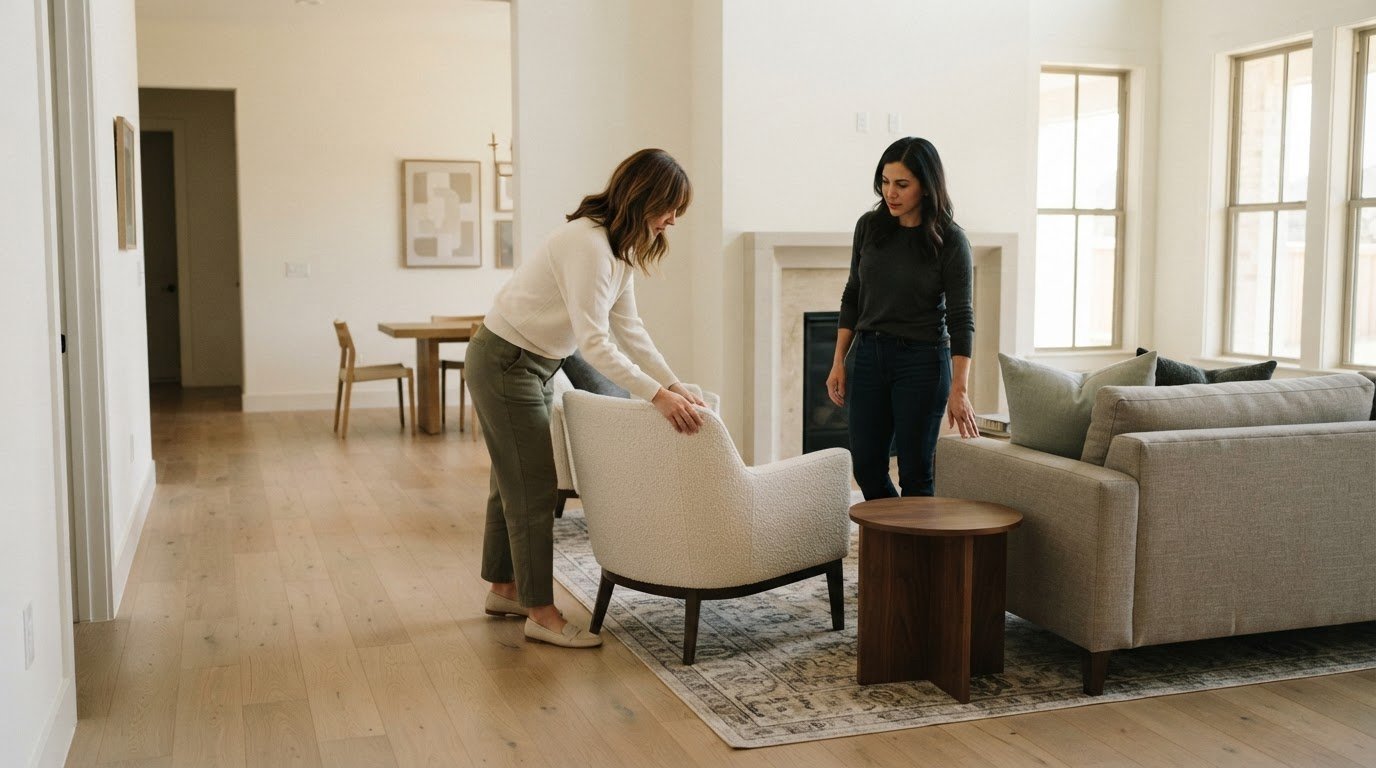
A free showroom appointment can turn inspiration into a considered furniture selection. The designer discusses pieces available through that retailer and how they might work together. For example, a living room plan may pair a sofa with occasional chairs, a rug, and lighting from the store’s range. The guidance is most useful when the room’s main needs align with those products.
What free furniture store design services are typically included? They may include discussing your preferences, comparing furniture sizes and finishes, and suggesting product arrangements for a room. Programs vary in scope, so treat the appointment as focused help with retailer merchandise, not automatically as a complete home design plan.
Bring a clear brief to make the meeting productive. Name the room, describe its main use, and identify pieces you plan to keep. A photograph of the space and a simple list of preferred colors can help communicate your vision. The designer can then use product knowledge to narrow choices, rather than presenting options without a shared direction.
In-store design works particularly well for a defined purchase, such as replacing a dining table or furnishing a guest room with coordinated pieces. It can also help when you want to compare fabric, finish, and scale in person. By contrast, a project involving several connected spaces may require decisions about materials and furnishings beyond one retailer’s selection.
After the consultation, review the proposed pieces as a group. Consider how each item relates to the room’s existing colors, furniture, and use. A chair that looks compelling on its own may not support the overall composition. The takeaway is simple: use a store appointment to refine a retailer-based selection, and consider broader design support when the brief extends beyond it.
For a coordinated approach to design and furnishings, explore tailored furniture selections.
MBlassingille Designs: Design
MBlassingille Designs is a natural next step when furniture selection needs to fit a broader residential plan. Its design and consulting services can bring room layout, finishes, and furnishings into one coordinated direction, rather than limiting decisions to a single retailer’s products.
For remodeling or new construction, early design decisions can align selections with the intended use of each space. Once the overall plan is established, the process can also support furnishing and accessory choices. This broader scope is useful when several rooms, existing features, or connected decisions need to work together.
If your project calls for a cohesive plan beyond a showroom appointment, contact MBlassingille Designs to discuss your design needs.
Set the Scope for Your Next Design Decision
Before choosing a design path, define what you want the room to accomplish and how much coordination the project needs. The choice between free design at a retail furniture store and a paid interior design consultant becomes clearer when you identify which decisions go beyond furniture selection.
For a room or home that needs a cohesive plan, MBlassingille Designs offers Design, Selections, and Consulting. These services can connect individual choices to the wider direction of a residential project, including remodeling or new construction. A clear starting brief can focus the conversation on how the space should function and which decisions to address first.
You don’t need every detail resolved before taking that step. Begin with the room or project scope, your priorities, and the questions you still need answered. Then start a design conversation with MBlassingille Designs and move forward with a more considered plan for your space.
Frequently Asked Questions
What do paid interior design consultants typically provide?
Paid interior design consultants typically provide guidance shaped around an agreed project scope. This may include developing a design direction, preparing layouts, coordinating materials and finishes, and selecting furnishings. For example, a kitchen remodel may require cabinetry, countertop, lighting, and hardware decisions to align. The written scope clarifies which design stages are included and where the consultant’s work ends.
How much do furniture store design services and interior designers cost in the U.S.?
There isn’t one standard U.S. cost for either option. A furniture retailer may offer a complimentary program under its own terms, while a paid consultant sets fees according to the agreed work. Scope, project complexity, and the level of design involvement affect the total. Compare what each service includes, and distinguish any design charge from the cost of furniture or materials.
What are the typical hourly rates and project fees for interior designers?
Hourly rates and project fees vary, so a single figure wouldn’t describe every designer or project. A consultant may structure fees around time, a defined project scope, or particular design phases. A small furnishing brief and a whole-home renovation require different levels of coordination. Review the proposed fee structure alongside the deliverables, revisions, and project stages it covers.
How do furniture retailers’ design services compare with independent interior designers?
A retail furniture store’s free design option differs from a paid interior design consultant in product scope and project breadth. Retailer services center on the store’s products and can support a focused furnishing decision. An independent designer may address wider project decisions. For a Dallas homeowner, that distinction matters when plans involve several rooms, renovation finishes, or furnishings from different sources.
What are the pros and cons of free in-store design versus hiring a paid consultant?
The retail furniture store free design vs paid interior design consultant decision depends on the scope you need. In-store help can provide product-focused direction without a separate consultation charge, subject to program terms, but recommendations relate to that retailer’s range. A paid consultant charges for design work within an agreed scope and may address broader decisions. Choose based on whether you need furniture selection or a comprehensive plan.