
Tag: design costs

  • Furniture Store Design Service or Independent Designer: Cost and Value

    Furniture Store Design Service or Independent Designer: Cost and Value

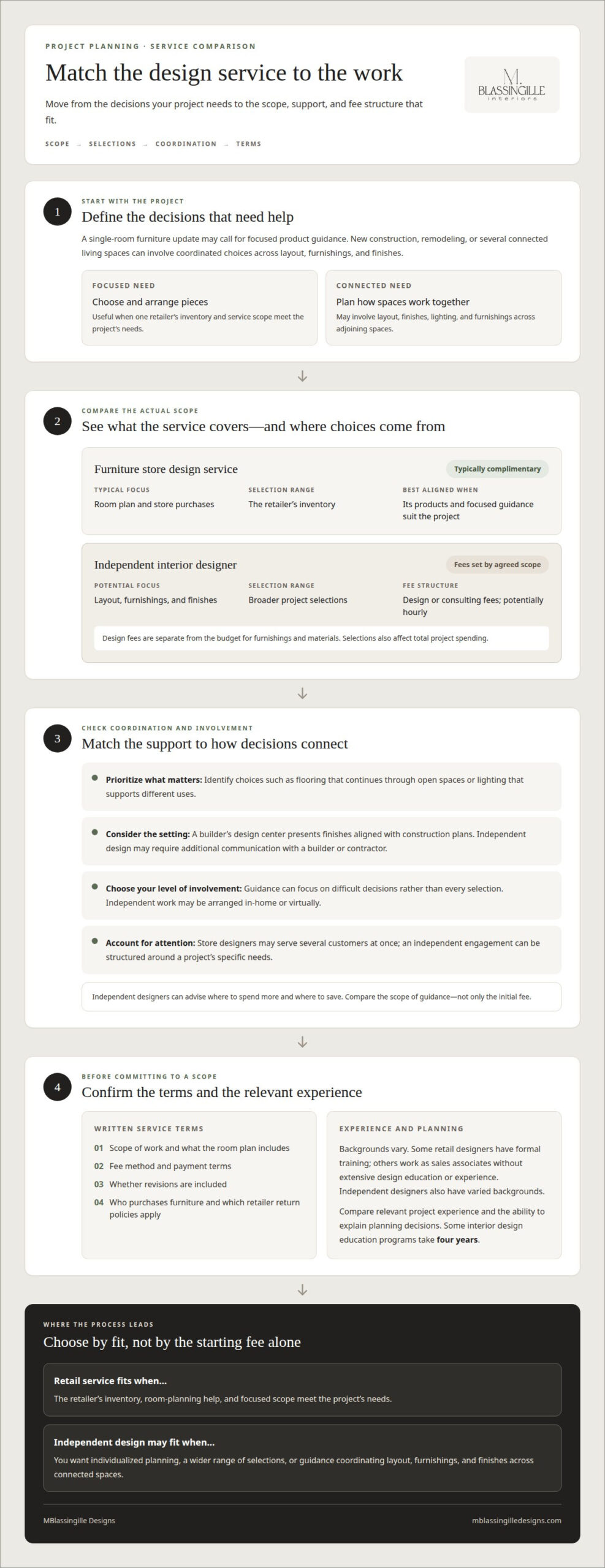
    The lower-cost option can come with a narrower scope. A furniture store design service is often complimentary and centers on the store’s own products, while hiring an independent interior designer means paying for a broader, more tailored process that can address layout, furnishings, and finishes. The right fit depends on how much guidance and choice your project calls for.

    A furniture store design service can be practical when you’re choosing pieces from one retailer and want focused help. An independent interior designer may be a better fit when you need a coordinated plan across rooms, more individualized guidance, or selections from a wider range of sources. This comparison explains how the options differ in scope, attention, and fees, so you can decide what suits your project before making design decisions.

    Key Takeaways

    • Match the design option to the scope: store-based help centers on its inventory, while independent design can address a broader plan for space, furnishings, and finishes.
    • Compare what each fee structure covers, not just the initial cost; the level of guidance and selection support affects overall value.
    • Decide how much personal attention and coordination your project needs before choosing a service.
    • For a cohesive plan across a residence, MBlassingille Designs offers design, selections, and consulting tailored to the project.

    What is the difference between a paid interior designer and a free in-store designer?

    A furniture store designer typically helps you select and arrange items from that retailer’s inventory. An independent interior designer can develop a broader plan for layout, finishes, lighting, and furnishings across connected spaces.

    Designer Fees and Overall Budget

    Independent designers charge design or consulting fees according to the agreed scope, separate from the budget for furnishings and materials. The selections can also affect total project spending, so compare the scope of work as well as the fee structure. Furniture store design services may be complimentary, but their recommendations are generally tied to the retailer’s products.

    Review the written service terms for the scope, fee method, payment terms, and how revisions are handled. Clarify who purchases furniture and which retailer policies apply to returns.

    Consultations, Room Plans, and Revisions

    A furniture store consultation typically focuses on choosing pieces from its inventory and arranging them within a room plan. An independent designer can consider the layout alongside furnishings, finishes, lighting, and how adjoining spaces relate. Store designers may serve several customers at once, while an independent engagement can be structured around a project’s specific needs.

    Ask the written service terms to define what the room plan includes and whether revisions are part of the scope. Store consultations are connected to the retail setting; independent design work may be arranged in-home or virtually.

    Designer Qualifications and Experience

    Qualifications differ: some retail designers have formal training, while others work as sales associates without extensive design education or experience. Independent designers may also have varied backgrounds, so relevant project experience and the ability to explain planning decisions are useful points of comparison. Some interior design education programs take four years.

    A project involving several living spaces needs a coordinated approach to layout and selections, not just recommendations for individual furniture pieces.

    Option Fee structure Typical focus Selection range
    In-store designer Typically complimentary Room plan and store purchases Retailer inventory
    Independent designer Design fees, potentially hourly Layout, furnishings, and finishes Broader project selections

    Choose based on whether you need help selecting a retailer’s products or a coordinated plan for the space.

    Choosing a design service based on budget and expectations

    Start with the decisions your project needs to address. A furniture retailer can help you select items from its own inventory, while a builder’s design center may present finishes aligned with construction plans. An independent designer can shape a broader plan for how flooring, lighting, and furnishings relate across spaces. The choice of a furniture store design service vs hiring an independent interior designer depends on the scope of guidance you need.

    The lowest upfront expense isn’t the only measure of value. A limited selection may work well when standard options suit your priorities. If your vision involves specific materials or a cohesive look across adjoining rooms, broader design support may be a better fit. Consider design fees alongside furniture, finishes, and other project costs.

    Use these practical criteria to match the service to your project:

    • Define the scope: A single-room furniture update may need focused product guidance. New construction or remodeling can involve connected choices across layout, finishes, and furnishings.
    • Set priorities: Identify where selections matter most, such as flooring that continues through open spaces or lighting that supports different uses.
    • Allow for coordination: A builder’s design center works within its construction plans. Independent design may require additional communication with the builder or contractor.
    • Choose the level of involvement: You don’t have to commission help for every decision. Professional guidance can focus on difficult choices, such as balancing materials across adjoining rooms.

    Independent designers can advise where to spend more and where to save, helping align the plan with your budget. A strong design plan can also make later decisions more orderly, especially when construction and finish selections must work together. The furniture store design service vs hiring an independent interior designer comparison can help clarify whether your project needs focused product selection or broader planning. For a project beginning with a new build, design planning for new construction can connect early choices with the intended interior.

    Choose a retail service when its inventory and scope meet your needs. Consider independent design when you want individualized planning, a wider range of selections, or guidance across several connected decisions.
    Furniture Store Design Service or Independent Designer: Cost and Value

    Interior designer and decorator costs

    The distinction between interior design and decorating affects the work involved. Interior design can include planning a space’s layout as well as its furnishings and finishes. Decorating primarily focuses on furnishings for an existing space. A renovation that changes how rooms function may therefore need a different scope from refreshing a living room with furniture and accessories.

    Interior design typically takes more hours than decorating because it includes both planning and decoration. Designers and decorators may bill by the hour, so the number of decisions and the work involved shape the total. For example, coordinating a renovation’s layout, material choices, and lighting involves different tasks from selecting a sofa and coordinating its fabric with existing finishes.

    Think about the result you want before comparing fee structures. If your goal is to furnish an established room, decorating may address the central need. If the project involves layout changes or choices across connected spaces, an interior designer’s broader scope may be more suitable. You can also define support for a specific part of the project rather than every room and decision.

    For independent design, project-specific pricing depends on the agreed scope and the decisions involved, and is provided after a quote request. The scope should make clear which planning and selection work is included. Furnishings and recommended materials can also affect the overall budget, so distinguish design fees from purchasing costs as you review the plan.

    • Design: Consider this scope when layout, renovation decisions, and furnishings need to work together.
    • Decorating: Consider this scope when the room’s arrangement remains and the priority is curating furnishings.
    • Defined support: Focus professional guidance on the rooms or decisions that carry the most weight for your vision.

    Compare the work included, not just the title or billing method. A clear scope connects the fee to the level of detail, choices, and coordination your project requires.

    Personalized service and long-term client relationships

    An independent designer’s process can take more time because details are tailored to your preferences. That may involve several meetings, detailed discussions, and ongoing communication. For example, a designer can revisit furniture scale or fabric choices as your priorities become clearer, rather than limiting the conversation to one store visit.

    That continuity matters when decisions affect more than one room. A sofa, rug, and lighting plan in an open living area can influence adjoining spaces. An independent designer can consider those elements together to create a functional home without making every room match.

    For a focused purchase, store-based help can be practical. The furniture store design service vs hiring an independent interior designer decision often comes down to how much tailored guidance your project needs. A builder design center may offer a streamlined path with finishes aligned to construction plans, while an independent designer can provide a broader, more individualized plan.

    • For focused retail choices: Store-based help can suit a room where the main goal is selecting pieces from one inventory.
    • For a tailored home: Independent design can support connected decisions across furnishings, finishes, and layout.
    • For a busy schedule: A streamlined package may reduce time spent comparing options, while independent collaboration needs more discussion.
    • For lasting function: Consider whether the plan accounts for traffic flow, daily routines, and how adjoining spaces are used.

    Personal attention is most useful when it helps resolve important decisions, not simply when it adds meetings. In the furniture store design service vs hiring an independent interior designer comparison, consider whether ongoing input will help address choices such as how a large piece affects movement through a room. Clear decisions can help avoid changes after selections are made.

    If your project needs a cohesive plan shaped around how you live, discuss a tailored interior design plan for your spaces and priorities.

    MBlassingille Designs: Design

    MBlassingille Designs helps homeowners develop coordinated interiors through design, selections, and consulting for new construction, remodeling, and high-rise condominiums. The studio’s work can be a fit when furniture choices alone won’t resolve questions about space planning, materials, and finishes across connected rooms. Serving Dallas and the surrounding area, the studio brings these services together under one roof.

    During new construction, design guidance can align finishes and furnishings with how you intend to use each space. For a remodeling project, consulting can bring layout considerations and material selections into a cohesive direction. MBlassingille Designs focuses on interior design and consulting, working alongside builders and architects.

    If you’re ready to discuss a project shaped around your home and priorities, contact MBlassingille Designs.

    Set the Direction for Your Next Design Decision

    Choosing between a furniture store design service and hiring an independent interior designer becomes clearer when you define what the space needs to support. Identify the rooms involved, how you use them, and which decisions matter most. These priorities provide a practical starting point for a design conversation.

    You don’t need every finish or furnishing chosen before seeking professional input. A clear sense of your goals, concerns, and preferred level of involvement can help shape the scope. It also gives the process direction, whether you’re planning a new home or updating an existing one.

    If you’re ready to discuss the next step for your home, contact MBlassingille Designs. A thoughtful conversation can help you move from open questions toward a considered plan.

    Frequently Asked Questions

    Which is the Better Choice?

    The better choice depends on whether you need product guidance or a coordinated design plan. A furniture store’s service may suit a purchase focused on its own merchandise. An independent designer is a stronger fit when decisions extend to layout, finishes, and furnishings from different sources. For a Dallas home project, consider how many connected decisions need professional direction.

    What services are included in a furniture store’s design service?

    A furniture store’s design service typically helps customers choose pieces from that retailer and plan their placement in a room. The scope varies by store and may center on a consultation, room plan, or product recommendations. For example, a living room plan might arrange a sofa, chairs, and rug from the store’s offerings.

    How much do furniture store design services cost?

    Furniture store design services may be complimentary, particularly when they focus on helping customers select the retailer’s products. The store’s policies determine what the consultation includes. A room plan or product advice does not necessarily cover every design decision, so distinguish design assistance from the cost of furniture and accessories.

    How much does an independent interior designer cost in the United States?

    Independent interior design fees depend on the project scope and the amount of design work involved. Some designers bill hourly, while others set fees for an agreed project scope. Furnishings and recommended materials are separate budget considerations. A useful estimate starts with defining the rooms, decisions, and level of support involved.

    What are the differences between furniture store designers and independent interior designers?

    Furniture store designers generally guide customers through that retailer’s products, while independent interior designers can address a broader residential project. Their work may include space planning, material selections, and furnishings from multiple sources. For example, an independent designer can consider how a kitchen’s finishes relate to an adjoining living area, rather than focusing only on furniture for one room.

    Do furniture store design services require buying furniture from the store?

    Store design consultations usually center on the retailer’s inventory, and purchase requirements depend on that store’s policies. The design service and the decision to buy are separate questions to clarify in the service terms. If a room needs pieces from several sources, an independent designer can develop a wider furnishing plan that isn’t centered on one retailer’s stock.

  • Interior Designer vs Design Consultant: Compare Costs and Services

    Interior Designer vs Design Consultant: Compare Costs and Services

    The more comprehensive option isn’t automatically the better fit. In the interior designer vs. design consultant comparison, the key difference is scope: a consultant typically provides focused guidance and recommendations, while an interior designer can shape a broader plan for a space, from layout and materials to furnishings and decor. The right choice depends on how much of the project you want to manage yourself.

    A larger renovation may call for more support, but project size is only part of the decision. Your budget, the expertise you need, and your preferred level of involvement matter too. A consultation may suit a defined question or a homeowner ready to coordinate next steps; broader design support may be a better fit when several rooms, selections, and project phases need to work together. This guide compares the roles by scope, expertise, cost considerations, and hands-on involvement, then offers a practical way to decide which approach fits your project.

    Key Takeaways

    • Match the scope of support to the project: focused guidance can help with a defined decision, while a broader design plan can coordinate choices across a larger renovation.
    • Separate design expertise from construction work. A designer can develop the interior plan and selections, while construction and general contracting remain distinct responsibilities.
    • Decide how much coordination you want to handle yourself. A consultation gives you recommendations to carry forward; more comprehensive design support can shape multiple project decisions.
    • Choose the level of involvement that fits your working style, from taking the lead on purchasing and next steps to receiving support with selections and furnishings.

    Choosing a service based on project size and budget

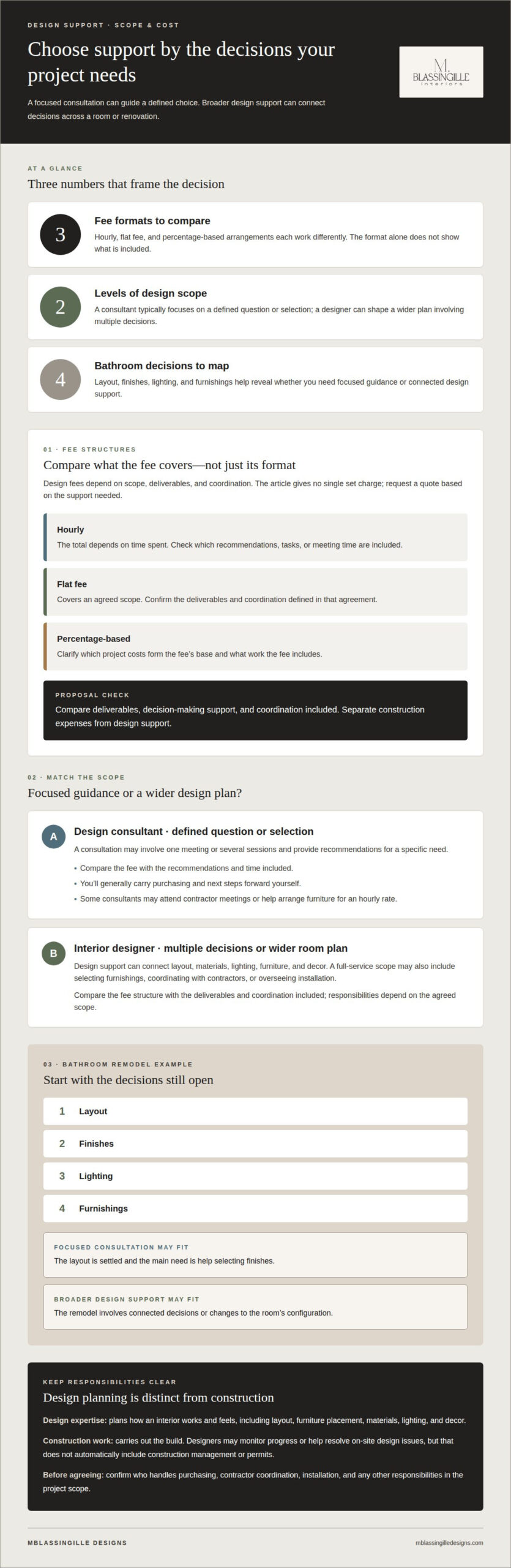
    In the United States, interior designers may charge hourly or use a flat fee; a consultant’s fee depends on the agreed scope. For any design fee, the price depends on scope, deliverables, and coordination, and is given after a quote request.

    Hourly, flat-fee, and percentage-based arrangements aren’t directly comparable without understanding their terms. With hourly billing, the total depends on time spent; a flat fee covers an agreed scope. If a proposal uses a percentage fee, clarify which project costs form its base and what work it includes. Compare deliverables and decision-making support, not just the billing method.

    For a bathroom remodel, first separate construction expenses from design support. Then list the decisions where you need guidance: layout, finishes, lighting, or furnishings. A focused consultation may fit when the room’s layout is settled and you mainly need help selecting finishes. Broader design support may suit a remodel involving connected decisions or changes to the room’s configuration. The more planning and coordination the scope requires, the more useful comprehensive design support may be.

    Option Project scope Budget approach Best fit
    Design consultant Defined question or selection Compare the fee with the specific recommendations and time included You’ll manage purchasing and next steps
    Interior designer Multiple decisions or a wider room plan Compare the fee structure with the deliverables and coordination included You want broader design direction

    Choose based on the decisions still open, the coordination you want, and the deliverables that fit your budget. A finish-selection question, for example, calls for a narrower scope than a bathroom remodel requiring layout and material planning.

    There is no single set charge: the fee depends on the project’s scope, deliverables, and coordination needs. Request a quote based on the support you need, then compare what each fee includes.

    Hourly charges depend on time spent, flat fees cover an agreed scope, and percentage fees depend on the project costs used as the base. Compare proposals by their included work and deliverables, since the fee depends on the scope and terms.

    Design expertise and construction expertise

    Design expertise focuses on how an interior works and feels as a whole. Interior designers plan layouts, furniture placement, materials, lighting, and decor. They may also address structural changes, such as removing a wall, or develop bespoke furniture and joinery. These decisions shape the space before construction begins.

    Interior design consultants are trained in interior design and specialize in spatial planning and design. Their work may include preparing design proposals, monitoring construction progress, resolving on-site design issues, or helping clients find construction contractors. This support connects a design plan to the work taking place, without making design and construction the same discipline.

    What qualifications or licenses are required for interior designers in the United States? There isn’t one qualification or licensing requirement that applies uniformly across every state and type of work. Licensing rules vary by state, so the requirements depend on where the project is located and what services are involved.

    Can interior designers manage contractors, permits, and construction projects? Designers may monitor progress and help resolve on-site issues, but those responsibilities don’t automatically include managing construction or obtaining permits. Design coordination and construction management are distinct roles; permit responsibilities depend on the project and applicable rules.

    For example, a designer planning a kitchen layout may coordinate material choices and review how the design is being implemented. The contractor carries out the construction work. Clear role boundaries keep design decisions, site coordination, and construction responsibilities distinct.

    Consider the expertise your project needs: spatial planning and material direction, construction execution, or coordination between the two. For interior design planning, a defined design scope can connect layout decisions with selections before work advances.

    Interior Designer vs Design Consultant: Compare Costs and Services

    Consultant versus full-service designer involvement

    The interior designer vs. design consultant choice depends on how much project involvement you want. A consultation may involve one meeting or several sessions. A full-service designer may select furniture and decor, coordinate with contractors, and oversee installation. The agreed scope defines which responsibilities are included.

    Licensing and certification requirements can vary by state and by the services performed. A professional title alone doesn’t establish which credentials apply to a specific project.

    Before choosing, define the work you want covered. If you need advice on a living-room palette, for example, a consultation may provide direction while you arrange purchases. If you want a coordinated overhaul, broader design involvement can connect furniture, decor, and installation decisions. Agreeing on responsibilities early helps prevent assumptions about who handles each step.

    An interior designer vs. design consultant comparison should also account for the limits of a focused engagement. Consultation clients are responsible for hiring contractors and purchasing materials and furnishings based on recommendations. Some consultants may attend contractor meetings or help arrange furniture at the project’s end for an hourly rate. Those tasks differ from ongoing project coordination.

    Before hiring, ask questions that define the working relationship:

    • Which deliverables will the engagement provide, such as a design proposal, selections, or a plan?
    • Does the scope cover contractor meetings, installation oversight, or furniture arrangement?
    • Who will purchase materials and furnishings, and who will coordinate contractors?

    Also clarify how revisions and additional support are handled. A written recommendation may answer a paint-selection question without covering purchasing or installation. Broader design support can connect more decisions, while construction responsibilities remain distinct. Choose the arrangement that aligns with your project needs and preferred role.

    Hands-on versus hands-off design support

    The right level of support depends on how much project coordination you want to handle. A focused consultation can give you direction on a defined decision while leaving purchasing, scheduling, and implementation in your hands. For example, you might get recommendations for a living-room palette, then select and order the furnishings yourself.

    That arrangement works best when you’re comfortable translating advice into action. You’ll need to compare options, make final selections, coordinate deliveries, and communicate with contractors if the work affects the space. A design consultant may also attend contractor meetings or help style furniture after the project, as a separate part of the engagement.

    More hands-on design support can connect decisions that would otherwise fall to you. An interior designer may source furnishings and decor, then oversee their installation. For a bedroom, that could mean aligning the furniture plan, lighting, finishes, and final placement so individual choices support one coherent scheme.

    Before settling on a level of involvement, map the work from recommendation to completion:

    • Define your role. Decide whether you’ll make purchases, track deliveries, and coordinate trades yourself.
    • Identify the decisions. List selections that need professional direction, such as paint, furniture, or lighting.
    • Set the handoff. Establish whether support ends with recommendations or continues through sourcing and installation.

    A homeowner who enjoys selecting furniture, for instance, may prefer expert direction on layout, then handle shopping independently. Someone balancing several suppliers may value a designer’s help sourcing pieces and overseeing placement. Neither approach is inherently better; the fit depends on your available time, confidence, and the number of connected decisions.

    Be precise about what “hands-on” includes. Sourcing and installation oversight are design tasks, but they don’t automatically mean construction management. If you want a more coordinated design process, explore design support that aligns selections with the level of involvement you prefer.

    MBlassingille Designs: Design

    MBlassingille Designs can help when a project needs more than isolated recommendations. Its design work connects space planning with material and finish selections, giving homeowners a coordinated direction for remodeling or new construction.

    For a focused decision, consulting or selections can help clarify specific choices. For a broader renovation, design support can bring layout, finishes, and furnishings into one considered plan. The right starting point depends on how many decisions remain open and how much guidance you want throughout the process.

    If you’re planning a residential project, contact MBlassingille Designs to discuss the design support that fits your scope.

    Set your project up for a clear next step

    The interior designer vs. design consultant decision becomes easier when you identify the choice you need to make first. Is the priority resolving one design question, or establishing direction for a wider residential project? Naming that priority gives the work a useful starting point and helps keep early decisions connected to the result you want.

    Before moving forward, consider what you want to control and where you’d value professional direction. You might prefer to make final purchases yourself while getting help shaping a cohesive plan. Or you may want design guidance to bring several decisions into alignment. Being clear about your preferred role gives the conversation a practical focus.

    MBlassingille Designs can help translate those priorities into a considered design approach for your project. Contact MBlassingille Designs to discuss your design goals and take the next step with a clearer sense of direction.

    Frequently Asked Questions

    What is an Interior Design Consultant?

    An interior design consultant provides professional guidance to help resolve design decisions. That can include reviewing a floor plan, discussing how a room will function, or advising on finishes before selections are finalized. For example, a homeowner planning a Dallas condo finish-out might use consulting to assess a proposed layout and clarify material direction before coordinating those choices with the project team.

    Which One Is Right for You?

    Choose based on the decisions you need help making and the work you want to manage. If you’re preparing a new home and need a consistent design direction across rooms, broader design support may fit. If one defined issue is holding up progress, such as choosing finishes for a remodel, consulting may provide targeted guidance without expanding the project scope.

    What services does an interior design consultant typically provide?

    Consulting may include plan and layout reviews, selection guidance, and builder walkthroughs. In a kitchen project, for example, a consultant can review the proposed arrangement and help align cabinetry, surfaces, lighting, and hardware choices. MBlassingille Designs provides consulting for residential new construction and remodeling in Dallas and the surrounding area, connecting design decisions with project plans and selected materials.

    How do interior designers and design consultants differ in project responsibilities and scope?

    The distinction is usually the agreed scope, not simply the job title. A consultant may focus on advice or plan review, while a design engagement can include a wider range of interior decisions. MBlassingille Designs works alongside builders and architects on design and consulting; construction and architectural services remain separate responsibilities.

    When should I hire an interior designer versus a design consultant?

    Consider a designer when your project needs an integrated approach to space planning, furnishings, and finishes. Consulting may suit a narrower need, such as reviewing plans before a builder walkthrough or getting guidance on tile and lighting selections. For a Dallas-area home, start by deciding whether you need direction on one design question or a coordinated interior plan.

    How much do interior designers and design consultants charge in the U.S.?

    Design consultants’ fees depend on the agreed scope, deliverables, and coordination needs, so request a quote and compare what it includes.