

The more comprehensive option isn’t automatically the better fit. In the interior designer vs. design consultant comparison, the key difference is scope: a consultant typically provides focused guidance and recommendations, while an interior designer can shape a broader plan for a space, from layout and materials to furnishings and decor. The right choice depends on how much of the project you want to manage yourself.
A larger renovation may call for more support, but project size is only part of the decision. Your budget, the expertise you need, and your preferred level of involvement matter too. A consultation may suit a defined question or a homeowner ready to coordinate next steps; broader design support may be a better fit when several rooms, selections, and project phases need to work together. This guide compares the roles by scope, expertise, cost considerations, and hands-on involvement, then offers a practical way to decide which approach fits your project.
Key Takeaways
- Match the scope of support to the project: focused guidance can help with a defined decision, while a broader design plan can coordinate choices across a larger renovation.
- Separate design expertise from construction work. A designer can develop the interior plan and selections, while construction and general contracting remain distinct responsibilities.
- Decide how much coordination you want to handle yourself. A consultation gives you recommendations to carry forward; more comprehensive design support can shape multiple project decisions.
- Choose the level of involvement that fits your working style, from taking the lead on purchasing and next steps to receiving support with selections and furnishings.
Choosing a service based on project size and budget
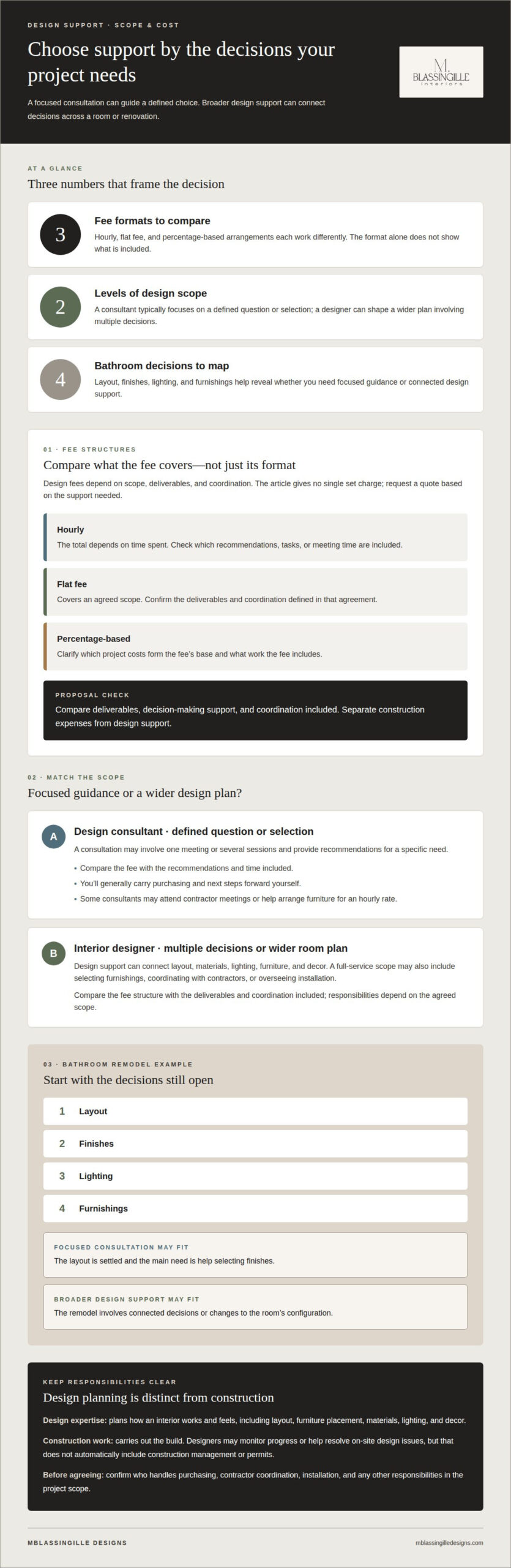
In the United States, interior designers may charge hourly or use a flat fee; a consultant’s fee depends on the agreed scope. For any design fee, the price depends on scope, deliverables, and coordination, and is given after a quote request.
Hourly, flat-fee, and percentage-based arrangements aren’t directly comparable without understanding their terms. With hourly billing, the total depends on time spent; a flat fee covers an agreed scope. If a proposal uses a percentage fee, clarify which project costs form its base and what work it includes. Compare deliverables and decision-making support, not just the billing method.
For a bathroom remodel, first separate construction expenses from design support. Then list the decisions where you need guidance: layout, finishes, lighting, or furnishings. A focused consultation may fit when the room’s layout is settled and you mainly need help selecting finishes. Broader design support may suit a remodel involving connected decisions or changes to the room’s configuration. The more planning and coordination the scope requires, the more useful comprehensive design support may be.
| Option | Project scope | Budget approach | Best fit |
|---|---|---|---|
| Design consultant | Defined question or selection | Compare the fee with the specific recommendations and time included | You’ll manage purchasing and next steps |
| Interior designer | Multiple decisions or a wider room plan | Compare the fee structure with the deliverables and coordination included | You want broader design direction |
Choose based on the decisions still open, the coordination you want, and the deliverables that fit your budget. A finish-selection question, for example, calls for a narrower scope than a bathroom remodel requiring layout and material planning.
There is no single set charge: the fee depends on the project’s scope, deliverables, and coordination needs. Request a quote based on the support you need, then compare what each fee includes.
Hourly charges depend on time spent, flat fees cover an agreed scope, and percentage fees depend on the project costs used as the base. Compare proposals by their included work and deliverables, since the fee depends on the scope and terms.
Design expertise and construction expertise
Design expertise focuses on how an interior works and feels as a whole. Interior designers plan layouts, furniture placement, materials, lighting, and decor. They may also address structural changes, such as removing a wall, or develop bespoke furniture and joinery. These decisions shape the space before construction begins.
Interior design consultants are trained in interior design and specialize in spatial planning and design. Their work may include preparing design proposals, monitoring construction progress, resolving on-site design issues, or helping clients find construction contractors. This support connects a design plan to the work taking place, without making design and construction the same discipline.
What qualifications or licenses are required for interior designers in the United States? There isn’t one qualification or licensing requirement that applies uniformly across every state and type of work. Licensing rules vary by state, so the requirements depend on where the project is located and what services are involved.
Can interior designers manage contractors, permits, and construction projects? Designers may monitor progress and help resolve on-site issues, but those responsibilities don’t automatically include managing construction or obtaining permits. Design coordination and construction management are distinct roles; permit responsibilities depend on the project and applicable rules.
For example, a designer planning a kitchen layout may coordinate material choices and review how the design is being implemented. The contractor carries out the construction work. Clear role boundaries keep design decisions, site coordination, and construction responsibilities distinct.
Consider the expertise your project needs: spatial planning and material direction, construction execution, or coordination between the two. For interior design planning, a defined design scope can connect layout decisions with selections before work advances.
Consultant versus full-service designer involvement
The interior designer vs. design consultant choice depends on how much project involvement you want. A consultation may involve one meeting or several sessions. A full-service designer may select furniture and decor, coordinate with contractors, and oversee installation. The agreed scope defines which responsibilities are included.
Licensing and certification requirements can vary by state and by the services performed. A professional title alone doesn’t establish which credentials apply to a specific project.
Before choosing, define the work you want covered. If you need advice on a living-room palette, for example, a consultation may provide direction while you arrange purchases. If you want a coordinated overhaul, broader design involvement can connect furniture, decor, and installation decisions. Agreeing on responsibilities early helps prevent assumptions about who handles each step.
An interior designer vs. design consultant comparison should also account for the limits of a focused engagement. Consultation clients are responsible for hiring contractors and purchasing materials and furnishings based on recommendations. Some consultants may attend contractor meetings or help arrange furniture at the project’s end for an hourly rate. Those tasks differ from ongoing project coordination.
Before hiring, ask questions that define the working relationship:
- Which deliverables will the engagement provide, such as a design proposal, selections, or a plan?
- Does the scope cover contractor meetings, installation oversight, or furniture arrangement?
- Who will purchase materials and furnishings, and who will coordinate contractors?
Also clarify how revisions and additional support are handled. A written recommendation may answer a paint-selection question without covering purchasing or installation. Broader design support can connect more decisions, while construction responsibilities remain distinct. Choose the arrangement that aligns with your project needs and preferred role.
Hands-on versus hands-off design support
The right level of support depends on how much project coordination you want to handle. A focused consultation can give you direction on a defined decision while leaving purchasing, scheduling, and implementation in your hands. For example, you might get recommendations for a living-room palette, then select and order the furnishings yourself.
That arrangement works best when you’re comfortable translating advice into action. You’ll need to compare options, make final selections, coordinate deliveries, and communicate with contractors if the work affects the space. A design consultant may also attend contractor meetings or help style furniture after the project, as a separate part of the engagement.
More hands-on design support can connect decisions that would otherwise fall to you. An interior designer may source furnishings and decor, then oversee their installation. For a bedroom, that could mean aligning the furniture plan, lighting, finishes, and final placement so individual choices support one coherent scheme.
Before settling on a level of involvement, map the work from recommendation to completion:
- Define your role. Decide whether you’ll make purchases, track deliveries, and coordinate trades yourself.
- Identify the decisions. List selections that need professional direction, such as paint, furniture, or lighting.
- Set the handoff. Establish whether support ends with recommendations or continues through sourcing and installation.
A homeowner who enjoys selecting furniture, for instance, may prefer expert direction on layout, then handle shopping independently. Someone balancing several suppliers may value a designer’s help sourcing pieces and overseeing placement. Neither approach is inherently better; the fit depends on your available time, confidence, and the number of connected decisions.
Be precise about what “hands-on” includes. Sourcing and installation oversight are design tasks, but they don’t automatically mean construction management. If you want a more coordinated design process, explore design support that aligns selections with the level of involvement you prefer.
MBlassingille Designs: Design
MBlassingille Designs can help when a project needs more than isolated recommendations. Its design work connects space planning with material and finish selections, giving homeowners a coordinated direction for remodeling or new construction.
For a focused decision, consulting or selections can help clarify specific choices. For a broader renovation, design support can bring layout, finishes, and furnishings into one considered plan. The right starting point depends on how many decisions remain open and how much guidance you want throughout the process.
If you’re planning a residential project, contact MBlassingille Designs to discuss the design support that fits your scope.
Set your project up for a clear next step
The interior designer vs. design consultant decision becomes easier when you identify the choice you need to make first. Is the priority resolving one design question, or establishing direction for a wider residential project? Naming that priority gives the work a useful starting point and helps keep early decisions connected to the result you want.
Before moving forward, consider what you want to control and where you’d value professional direction. You might prefer to make final purchases yourself while getting help shaping a cohesive plan. Or you may want design guidance to bring several decisions into alignment. Being clear about your preferred role gives the conversation a practical focus.
MBlassingille Designs can help translate those priorities into a considered design approach for your project. Contact MBlassingille Designs to discuss your design goals and take the next step with a clearer sense of direction.
Frequently Asked Questions
What is an Interior Design Consultant?
An interior design consultant provides professional guidance to help resolve design decisions. That can include reviewing a floor plan, discussing how a room will function, or advising on finishes before selections are finalized. For example, a homeowner planning a Dallas condo finish-out might use consulting to assess a proposed layout and clarify material direction before coordinating those choices with the project team.
Which One Is Right for You?
Choose based on the decisions you need help making and the work you want to manage. If you’re preparing a new home and need a consistent design direction across rooms, broader design support may fit. If one defined issue is holding up progress, such as choosing finishes for a remodel, consulting may provide targeted guidance without expanding the project scope.
What services does an interior design consultant typically provide?
Consulting may include plan and layout reviews, selection guidance, and builder walkthroughs. In a kitchen project, for example, a consultant can review the proposed arrangement and help align cabinetry, surfaces, lighting, and hardware choices. MBlassingille Designs provides consulting for residential new construction and remodeling in Dallas and the surrounding area, connecting design decisions with project plans and selected materials.
How do interior designers and design consultants differ in project responsibilities and scope?
The distinction is usually the agreed scope, not simply the job title. A consultant may focus on advice or plan review, while a design engagement can include a wider range of interior decisions. MBlassingille Designs works alongside builders and architects on design and consulting; construction and architectural services remain separate responsibilities.
When should I hire an interior designer versus a design consultant?
Consider a designer when your project needs an integrated approach to space planning, furnishings, and finishes. Consulting may suit a narrower need, such as reviewing plans before a builder walkthrough or getting guidance on tile and lighting selections. For a Dallas-area home, start by deciding whether you need direction on one design question or a coordinated interior plan.
How much do interior designers and design consultants charge in the U.S.?
Design consultants’ fees depend on the agreed scope, deliverables, and coordination needs, so request a quote and compare what it includes.